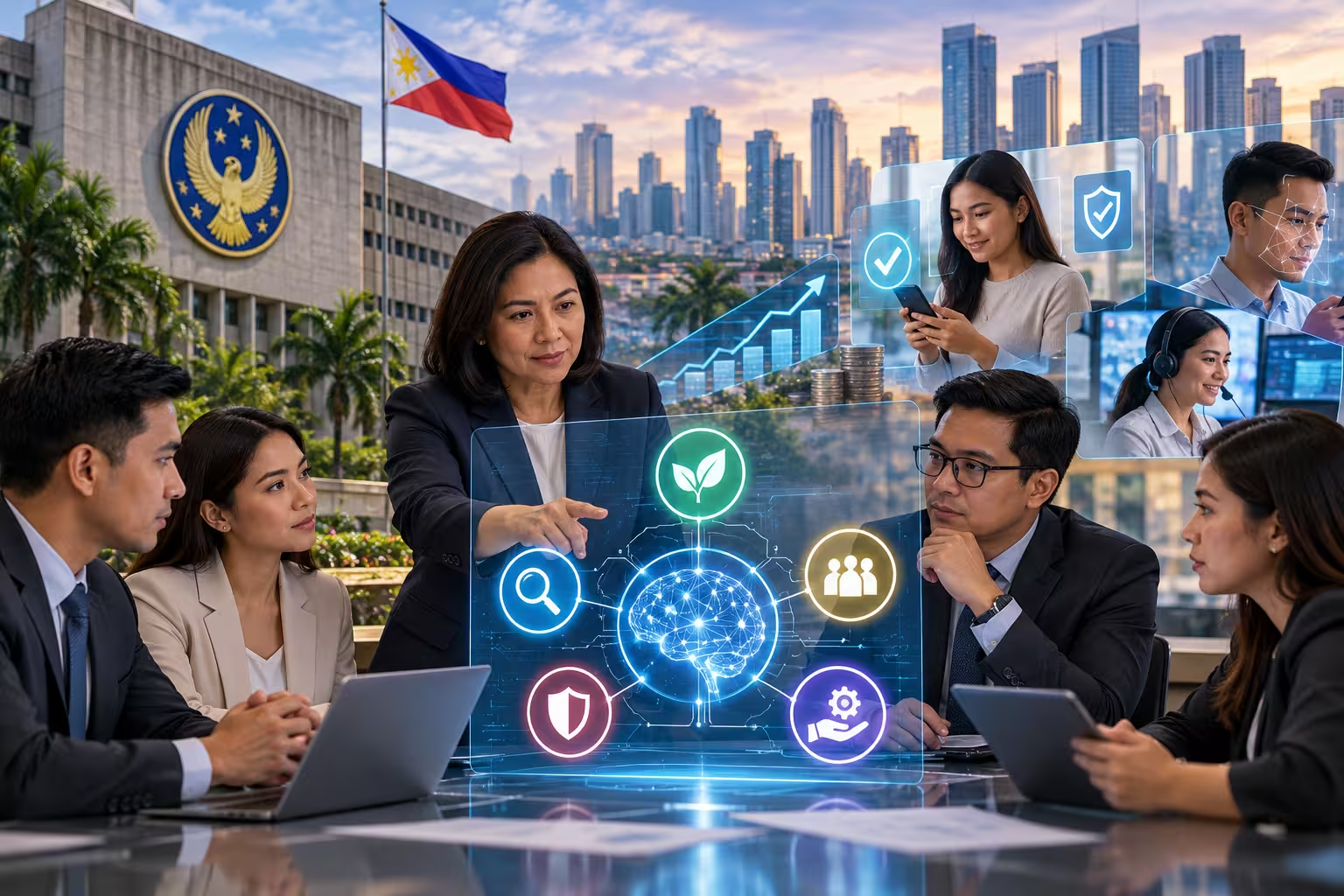
Over the last several decades, women in the Philippines have increasingly become vital players in the business world, breaking traditional barriers and rising to prominence across multiple sectors. The growing influence of women in business not only reflects societal shifts toward gender equality but also highlights their significant contributions to the country’s economic development. This transformation is a result of a combination of changing cultural attitudes, improved access to education, and the concerted efforts of women themselves.
In the Philippines, women have long been active in micro, small, and medium-sized enterprises (MSMEs), which form the backbone of the country’s economy. However, over time, more and more women have moved into larger-scale businesses, entrepreneurship, and even corporate leadership. Today, women play an essential role in sectors such as retail, manufacturing, banking, and information technology, among others. They have also proven to be entrepreneurial innovators, with women-owned businesses continuing to flourish and contribute to the Philippine economy.
A key factor in this shift has been access to higher education. In the Philippines, women outnumber men in universities and colleges, especially in fields like business administration and management. According to the Philippine Statistics Authority, women represent about 60% of university graduates, and many of them go on to hold influential positions in both the public and private sectors. With education as a driving force, women are able to acquire the expertise and credentials needed to lead successful businesses.
In addition to education, the Philippine government has played an important role in advancing the role of women in business. Through initiatives like the Philippine Commission on Women (PCW), the government has implemented programs designed to empower women, including grants and subsidies for women entrepreneurs, as well as gender-sensitivity training for companies. Policies that encourage female entrepreneurship have helped women overcome obstacles, particularly in terms of access to finance and business networks.
However, despite the progress made, there are still challenges that women face in the business world. One significant challenge is the underrepresentation of women in executive leadership roles. Although women are making strides in business, they remain a minority in boardrooms and senior management positions. Cultural expectations around family roles often influence career choices, with women being expected to juggle both business and domestic responsibilities.
In terms of entrepreneurship, women also encounter difficulties securing funding for their businesses. According to a study by the Asian Development Bank (ADB), women entrepreneurs often face barriers to accessing financial services, which is largely due to financial institutions’ reluctance to lend to women or a lack of awareness of women-led businesses. This has led to a reliance on alternative funding sources such as microfinance institutions or family loans.
Despite these challenges, the business world in the Philippines has seen numerous success stories of women who have overcome adversity and achieved significant accomplishments. One prominent example is Socorro Ramos, the founder of National Book Store, which started as a small bookstore and has now become one of the largest retail chains in the country. Her success has inspired many women entrepreneurs to take bold steps toward building their own businesses.
Furthermore, women like Mercedes “Mery” P. Yao, the founder of the beauty brand, The Face Shop Philippines, and Philippine National Bank president, Maria Luz B. Gatchalian, show that women can lead even in industries traditionally dominated by men. Their success stories reflect the changing landscape of business in the Philippines, where women are no longer seen as mere participants but as influential leaders in their own right.
The increasing visibility and success of women in the business world in the Philippines are undeniable. Although barriers remain, these women continue to demonstrate resilience, skill, and leadership, proving that women’s participation in business is crucial to the overall growth and prosperity of the country.