

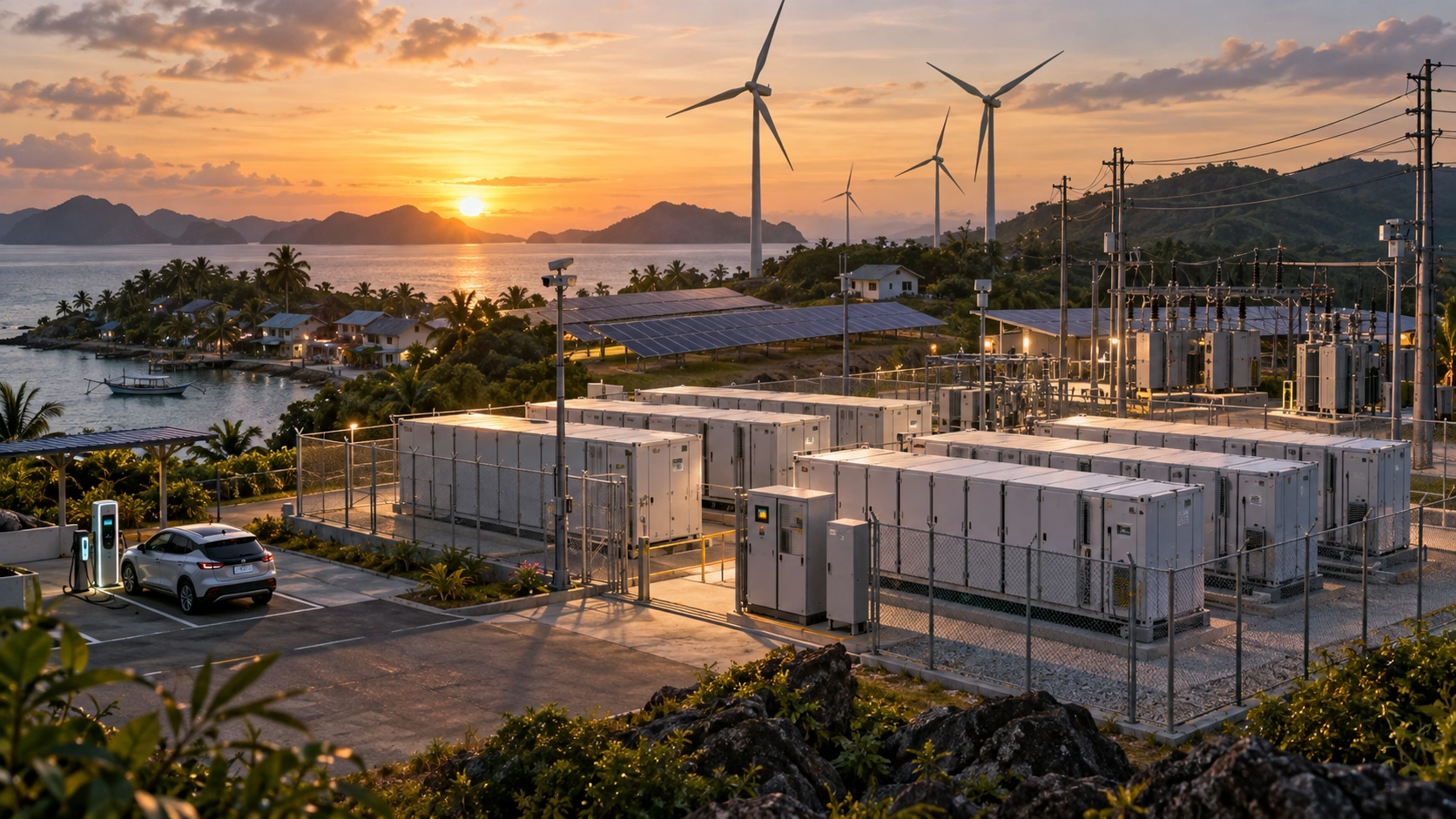
The Philippines Sets Its Sights on Offshore Wind
The Philippines has one of Asia’s most promising offshore wind resource potentials, with the World Bank estimating a technical capacity exceeding 178 gigawatts. In response, the Department of Energy (DOE) has awarded numerous Offshore Wind Service Contracts, signaling a new era for domestic energy companies and international developers alike. As of 2026, several projects are entering feasibility and environmental impact assessment stages, supported by a policy framework that includes the Offshore Wind Roadmap and streamlined permitting via Executive Order No. 21.
The Players and Their Strategies
Key players include BlueFloat Energy, Copenhagen Infrastructure Partners (CIP), and local conglomerates such as the Ayala Group and AboitizPower, which have formed joint ventures to de-risk early-stage development. These companies are investing in floating LiDAR technology, metocean surveys, and port infrastructure studies. The innovation lies not just in turbines but in adapting to the Philippines’ deep waters and typhoon-prone geography. Floating foundation technology, still nascent globally, is being evaluated as a viable solution for deeper sites.
Transmission and Port Infrastructure: The Make-or-Break Factor
Industry experts consistently point to two bottlenecks: transmission and port readiness. Offshore wind farms require submarine cables and upgraded onshore substations, while installation vessels need specialized ports. The DOE, together with the Philippine Ports Authority, has begun identifying candidate ports in Batangas, Mindoro, and Northern Luzon. According to the Global Wind Energy Council, the Philippines is among the markets to watch in Asia-Pacific for offshore wind deployment in the late 2020s.
Technological Innovation Beyond Turbines
Innovation extends to digital twins for turbine monitoring, AI-driven weather forecasting to optimize maintenance windows, and hybrid systems combining offshore wind with battery storage. Energy companies are also exploring green hydrogen production as a long-term value-add, though this remains at a conceptual stage locally.
Economic and Environmental Ripple Effects
Offshore wind development promises thousands of jobs in construction, O&M, and maritime logistics. It also reduces reliance on imported coal and liquefied natural gas. However, environmental groups urge careful marine spatial planning to protect biodiversity, particularly in the Verde Island Passage and other ecologically sensitive zones.
The 2026 Outlook
With the first auction for offshore wind potentially slated for 2026, the Philippines stands at a pivotal moment. The success of these early projects will determine whether the country becomes a regional offshore wind leader or remains a market of unrealized potential.







Leave a Reply