

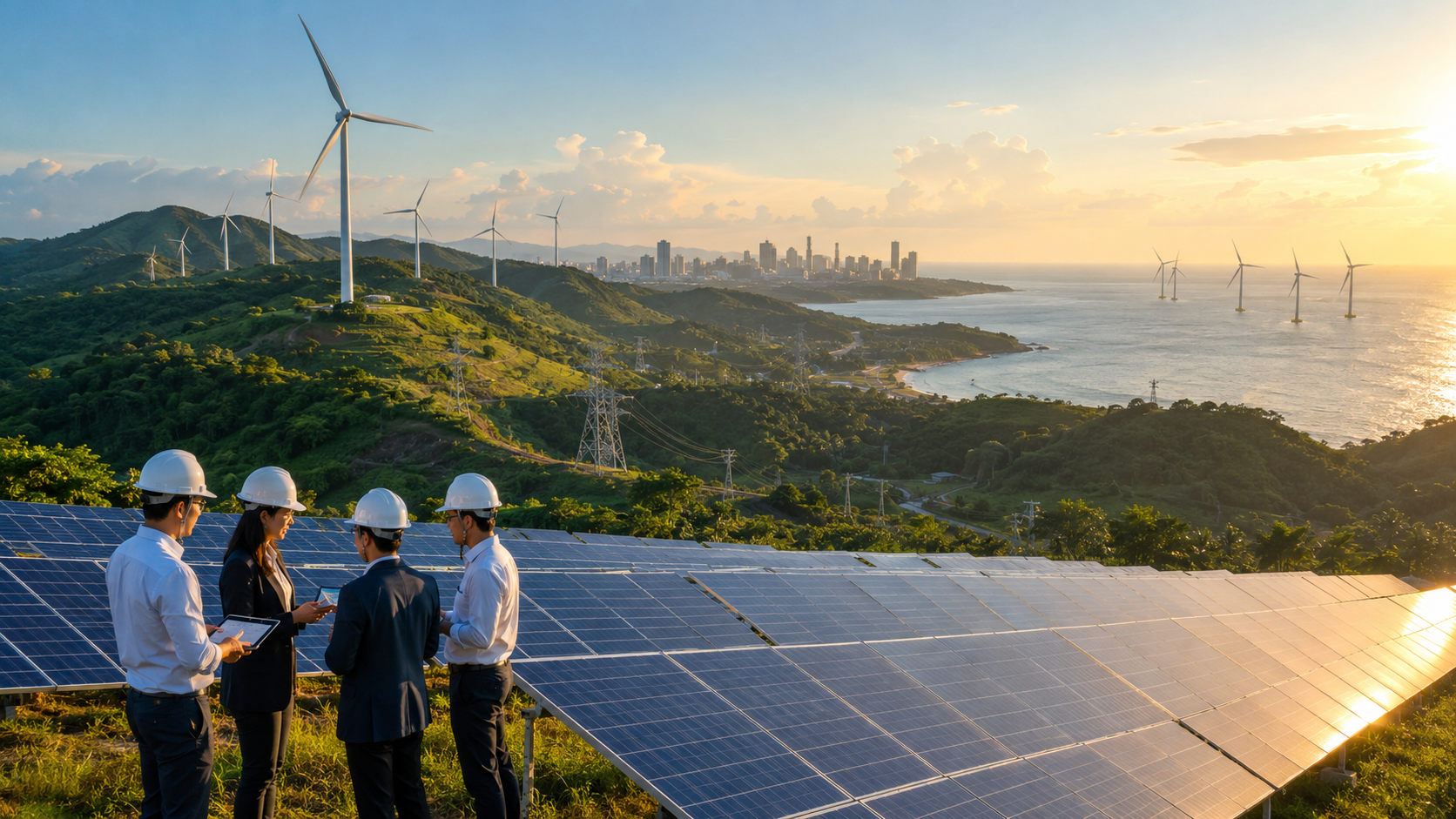
Renewable energy has moved from a policy aspiration to a bankable investment theme in the Philippines. With 100% foreign ownership now permitted for renewable projects, a competitive auction program, and a financing ecosystem that increasingly rewards low-carbon assets, 2026 is shaping up as a pivotal year for both developers and institutional investors.
The Green Energy Auction Program as a Market Signal
The Department of Energy’s Green Energy Auction Program (GEAP) has become the primary mechanism for awarding renewable capacity. Details are available on the DOE website (https://www.doe.gov.ph/, accessed August 2026). By setting reserve prices and competitive bidding for solar, wind, biomass, and run-of-river hydro, the GEAP gives developers revenue visibility while enabling lenders to underwrite projects with more confidence. Early auction rounds awarded nearly 2,000 MW in the first tranche and thousands more in subsequent rounds, creating a multi-year pipeline that extends well into 2026 and beyond.
100% Foreign Ownership and Corporate Offtake Demand
A 2022 legal opinion from the Department of Justice clarified that renewable energy projects are not subject to the 40% foreign equity cap, unlocking direct investment from global developers and funds. At the same time, the government’s Retail Competition and Open Access policy is gradually allowing large electricity consumers to choose renewable suppliers, creating a corporate power purchase agreement (PPA) market. This matters because corporate offtake agreements often have better credit profiles than traditional utility PPAs, reducing financing costs.
Financing Structures Driving Growth
Green Project Finance and Bonds
Philippine banks and multilateral institutions are expanding green loan books. ACEN’s landmark sustainability-linked loans and green bond issuances demonstrate how renewable developers are linking financing terms to decarbonization and capacity targets. In 2026, more projects are being financed through green bonds, sustainability-linked loans, and blended finance structures that combine concessional capital from development banks with commercial debt.
Tax Incentives and Carbon Market Upside
Renewable developers continue to benefit from income tax holidays and duty-free importation of equipment under the Renewable Energy Act. The Philippine Energy Plan projects a clean energy capacity expansion to over 52,000 MW by 2040, implying massive new investment. In addition, the Philippines is developing a carbon market framework that could create new revenue streams for project owners through carbon credits. This optionality is attracting hedge funds and commodity trading houses to Philippine renewable assets.
Risks and How Investors Are Managing Them
Grid interconnection delays, permitting complexity, and exposure to typhoons remain key risks. However, the National Grid Corporation of the Philippines is investing in transmission upgrades, and insurance products for renewable assets are becoming more sophisticated. Investors are also using portfolio diversification across geographies and technologies to mitigate weather-related volatility.
2026 Opportunity Set
The pipeline includes offshore wind projects in the north, utility-scale solar in Luzon, and geothermal expansion across the Visayas. For investors, the opportunity set spans listed renewable energy firms, green bonds from project sponsors, and direct equity stakes in pre-operational projects. The shift from coal dependence to a more diversified, low-carbon grid is not just an environmental imperative—it is now a structural investment trend.










Leave a Reply