


The Credit Gap That Banks Could Not Close
Micro, small, and medium enterprises (MSMEs) make up 99.6% of businesses in the Philippines and employ over 65% of the workforce. Yet for decades, they have been systematically excluded from formal credit. The reason is structural: traditional banks rely on collateral, audited financial statements, and formal credit histories — requirements that most sari-sari store owners, online sellers, and gig workers simply cannot meet.
Embedded finance is changing that equation. By integrating lending directly into the digital platforms where MSMEs already transact, financial institutions are discovering that data can serve as collateral. Transaction histories, platform sales data, and payment behavior are emerging as powerful proxies for creditworthiness, allowing lenders to serve borrowers who were previously invisible to the banking system.
GCash’s Fuse Financing: ₱451 Billion and Counting
The most striking example of embedded lending at scale is Fuse Financing, the lending arm of GCash. As of the second quarter of 2026, Fuse has disbursed ₱451 billion in loans to 11.5 million borrowers nationwide — with one in three borrowers being a nano, micro, or small enterprise.
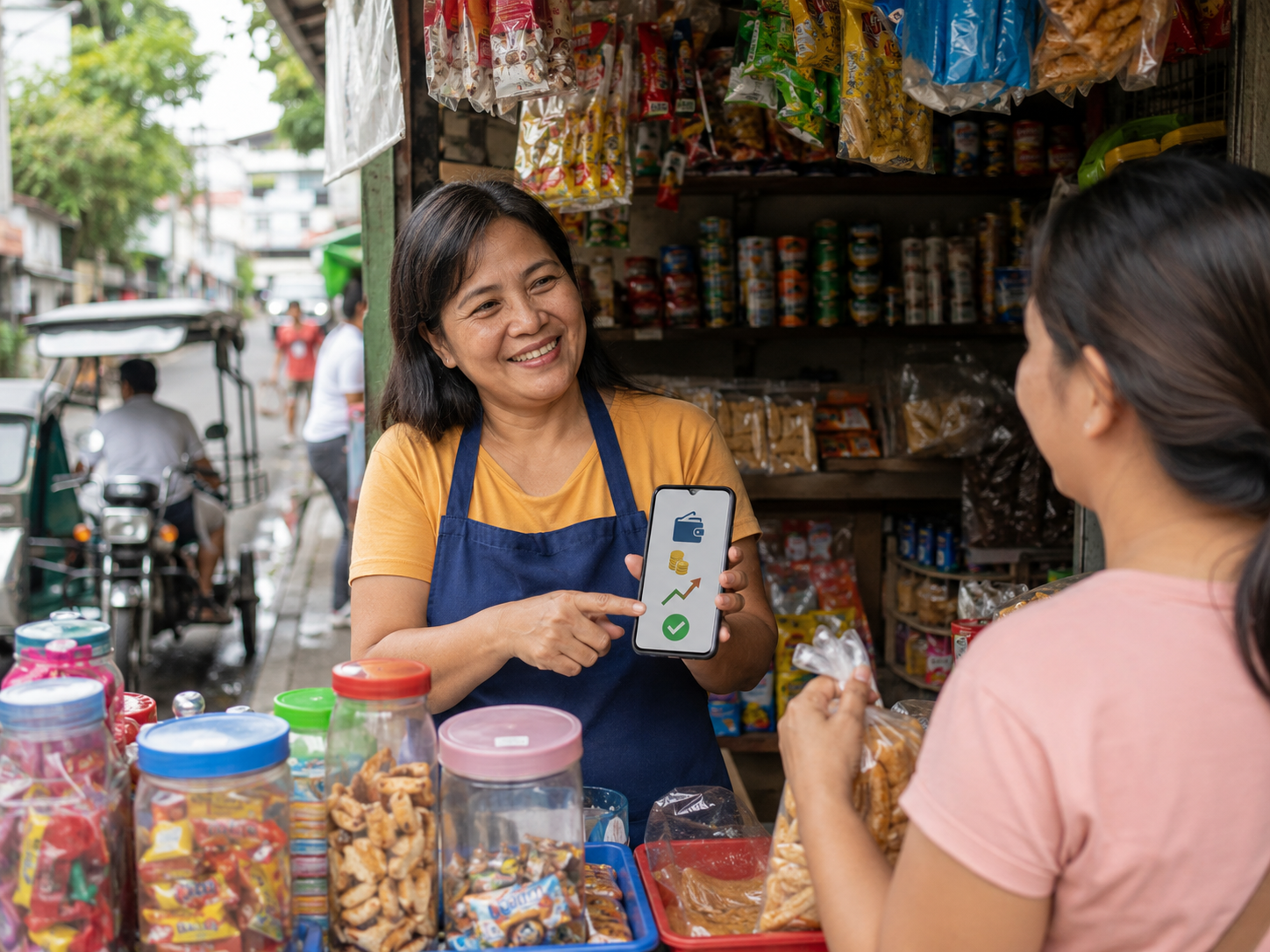
The mechanics are elegantly simple. Through GCash for Business, entrepreneurs accept digital payments, generating a digital financial footprint. This alternative data feeds into GScore, an AI-powered credit assessment system that evaluates creditworthiness based on digital behavior rather than traditional credit history. Eligible businesses can then access GLoan Negosyo with loans up to ₱350,000 directly within the GCash app, or up to ₱2 million through the GCash for Business Portal.
In February 2026, the Asian Development Bank (ADB) reinforced this model with a $30 million loan to Fuse Financing to expand credit access for women-owned MSMEs and businesses in high-poverty provinces. The ADB’s backing signals institutional confidence that embedded lending is not just commercially viable — it is a legitimate development finance tool.
The Netbank–JuanHand Partnership: Infrastructure as a Service
Not every embedded lending play requires a super app. Netbank, a rural bank, has positioned itself as a banking-as-a-service infrastructure provider, enabling fintech lending apps to embed financial services into their customer journeys without building banking infrastructure from scratch.
Its partnership with JuanHand, a fintech lending app that has disbursed over ₱40 billion in loans to more than 12 million users, demonstrates how embedded finance can extend reach to underserved communities. “Through embedded finance, we’re enabling JuanHand to better serve more underserved Filipinos,” said Amiel de Sotto, Head of Lenders at Netbank.
This model is particularly significant because it does not depend on the scale of a GCash or Maya. Any fintech app with a user base and a lending proposition can plug into a regulated banking partner and offer credit products immediately — accelerating the pace of financial inclusion across the archipelago.
Why Embedded Lending Works Where Traditional Banking Failed
Three factors explain the rapid acceleration of embedded lending in the Philippines. First, data-driven underwriting allows lenders to assess risk using alternative data — transaction histories, platform activity, and cash flows — rather than formal credit records. Second, speed and convenience: embedded credit products offer near-instant approval and disbursement, addressing urgent needs like inventory restocking or bill payments. Third, contextual relevance: credit is offered at the point of need, whether at an e-commerce checkout or inside a seller’s dashboard.
The Buy Now, Pay Later (BNPL) market, a subset of embedded lending, is projected to reach ₱45 billion in transaction value by 2026, growing at over 20% annually. For millions of Filipinos, embedded lending is not a convenience — it is the first time formal credit has ever been accessible.










Leave a Reply