

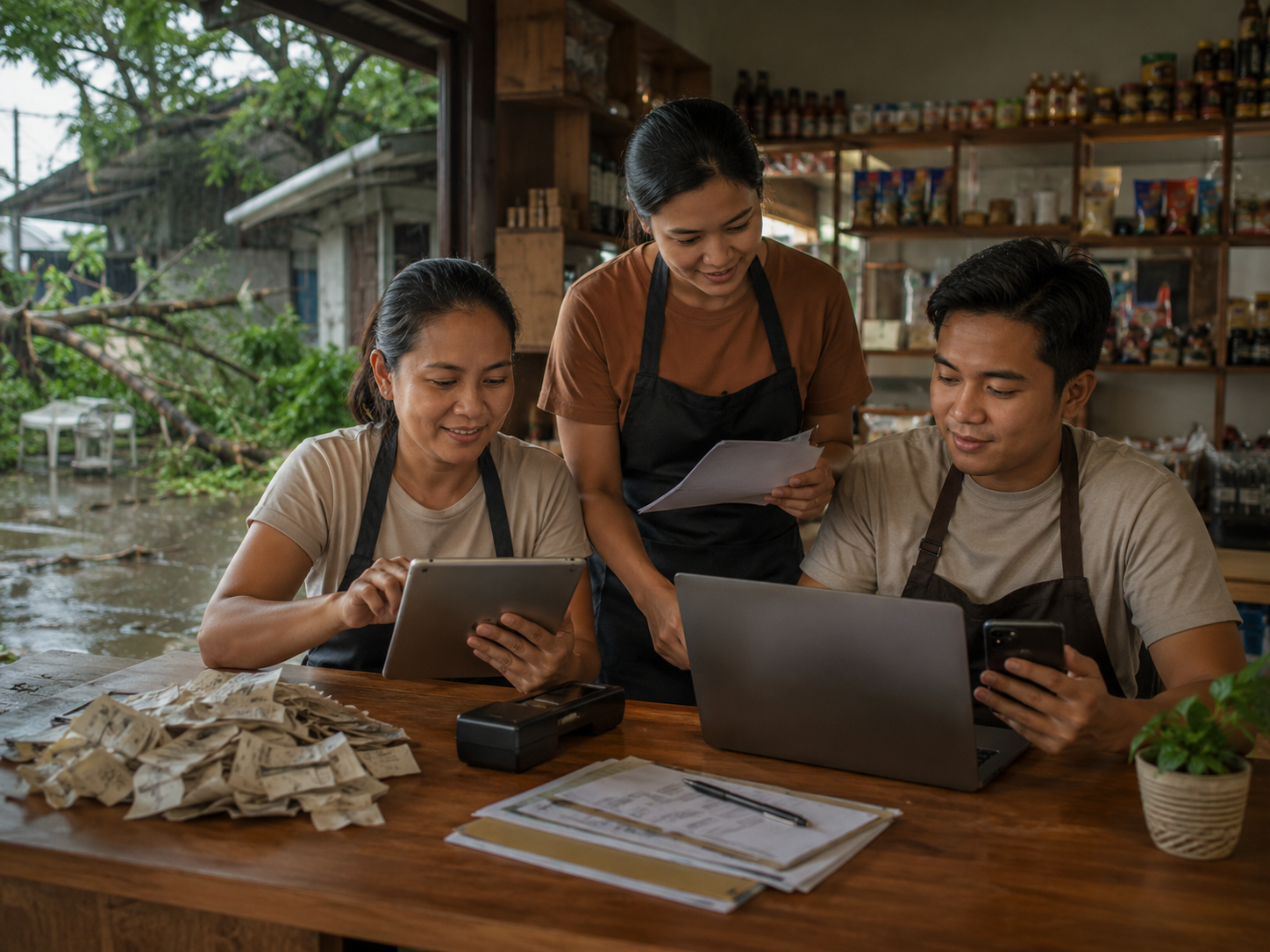
The rapid adoption of digital payments in the Philippines is often viewed as a story about consumer convenience. For small businesses, however, the larger transformation is taking place behind the counter.
When a transaction moves from cash to a traceable digital channel, it can become more than a payment. It can create a record that supports reconciliation, bookkeeping, cash-flow analysis, and management decisions.
That distinction is important for Philippine MSMEs, many of which still combine cash collections, bank transfers, e-wallet payments, and manual accounting processes.
Digitalization can simplify that fragmented system, but only when payments are connected with the rest of the business operation.
The Hidden Administrative Cost of Cash
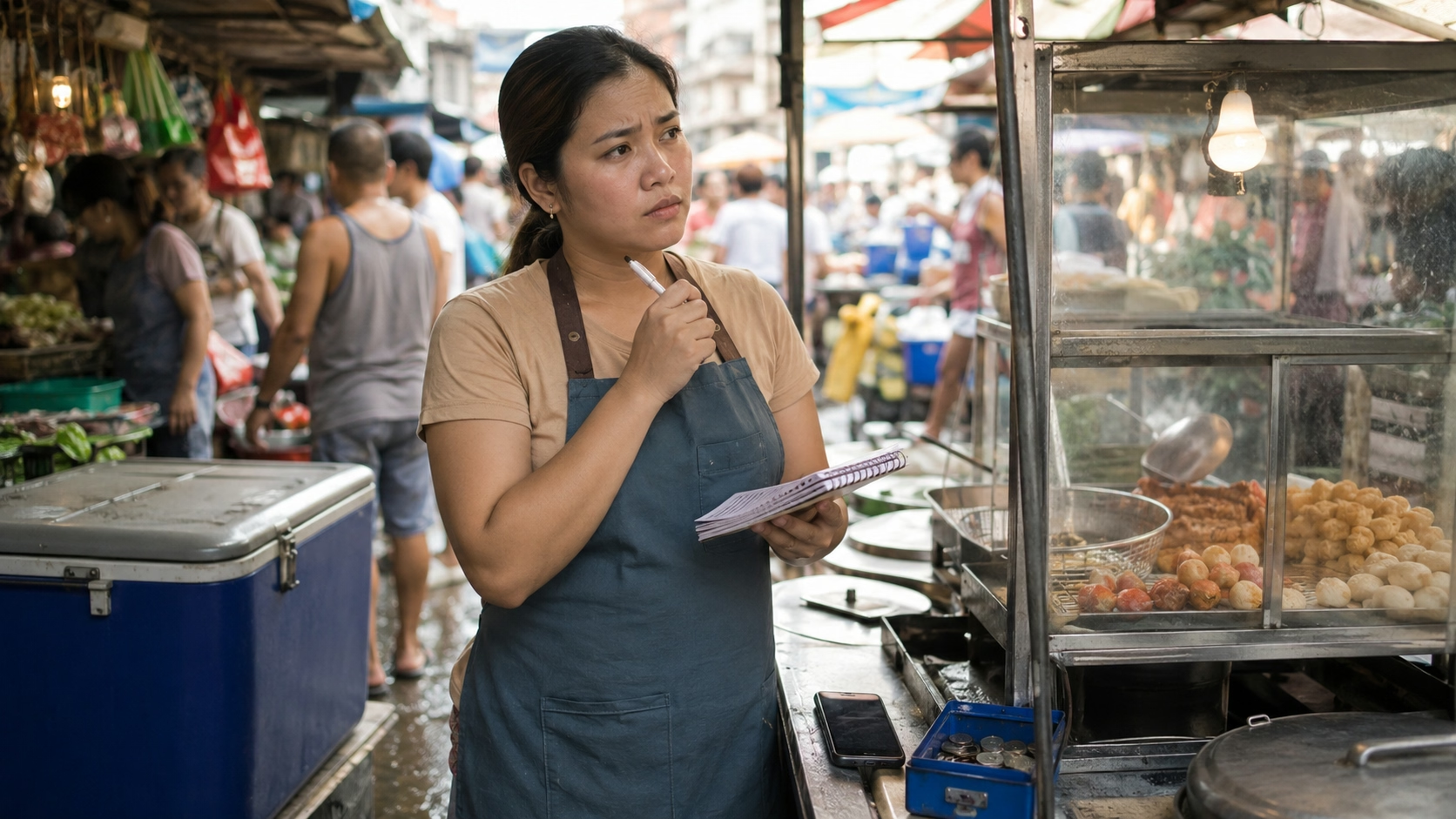
Cash appears simple because payment is immediate. Operationally, it often requires substantial manual work.
At the end of the day, employees must count collections, compare them with sales records, identify discrepancies, prepare deposits, and update accounting files. A business accepting payments through several channels may also need to compare screenshots, transaction references, bank statements, and customer messages.
This administrative burden grows with transaction volume.
The Bangko Sentral ng Pilipinas has promoted the expansion of digital payments through the country’s National Retail Payment System and broader financial digitalization initiatives. Official publications and payment-sector information are available through the Bangko Sentral ng Pilipinas.
The important operational change for MSMEs is not the disappearance of cash. It is the growing ability to create transaction trails that can be organized and analyzed.
From Payment Confirmation to Automatic Reconciliation
Consider a small retailer receiving hundreds of transactions each week.
In a manual system, the owner may need to determine whether every bank transfer or e-wallet payment corresponds to a valid order. Staff may spend hours searching chat histories and matching reference numbers.
Digital integration can reduce this work.
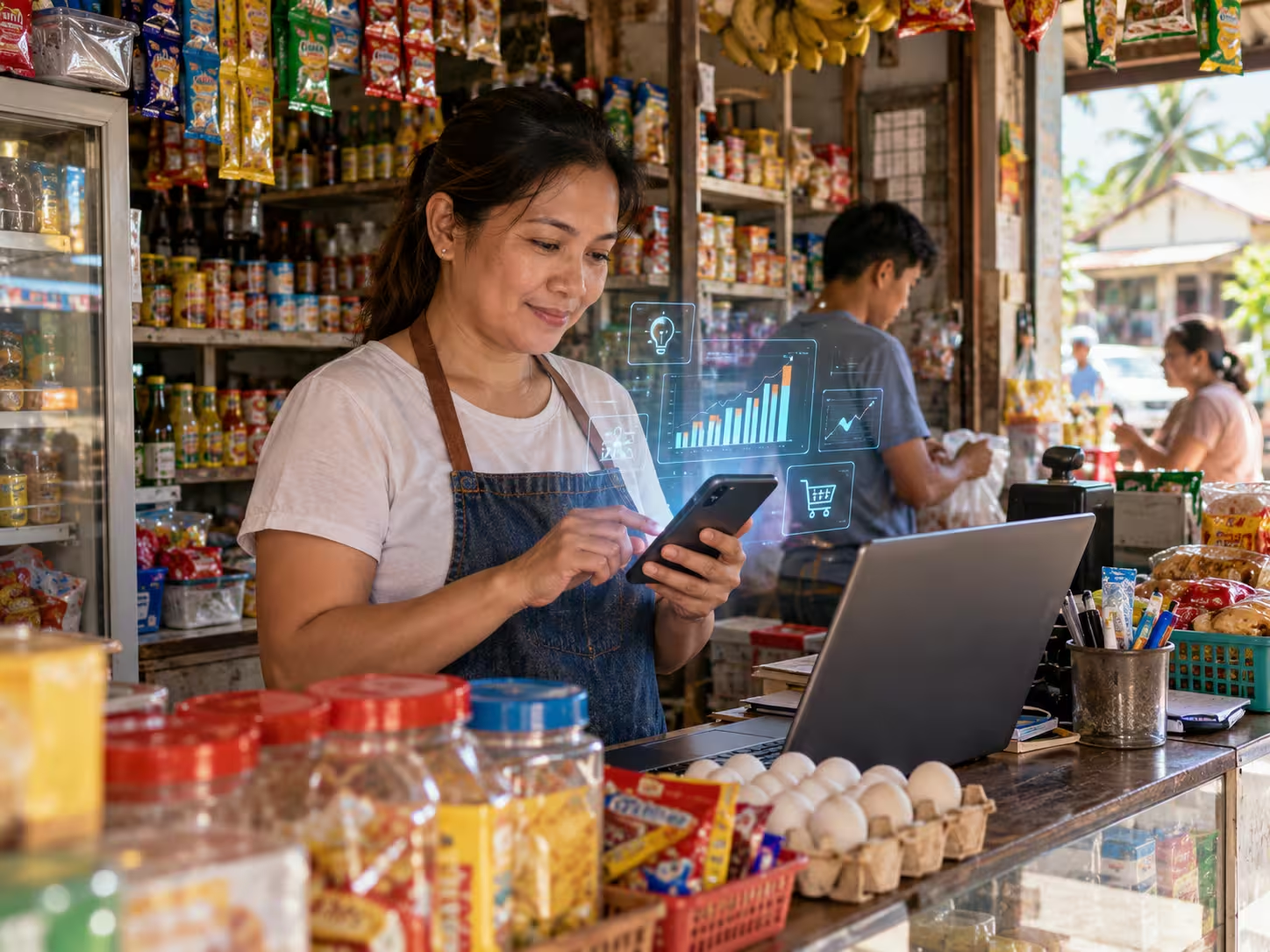
When a point-of-sale system, online store, or invoicing tool is connected to payment information, a successful transaction can automatically change an order from “unpaid” to “paid.” The same record can then support sales reporting and accounting.
This reduces duplicated data entry and makes discrepancies easier to identify.
The business gains something even more valuable: a clearer view of available cash.
Better Records Can Improve Purchasing Decisions
Cash-flow problems are not always caused by low sales. They can also result from poor visibility.
A business may appear busy while money remains tied up in unpaid invoices, excessive inventory, or expenses that have not been properly categorized.
Digital transaction records allow owners to compare money coming in with obligations going out. This information can support practical decisions about when to reorder stock, delay a nonessential expense, or negotiate different supplier terms.
For small enterprises with narrow margins, faster visibility can be as important as higher revenue.
A Realistic Digital Strategy for Small Businesses
The most effective approach is rarely to adopt every available payment platform.
A Philippine MSME should first identify which channels its customers actually use, how transaction fees affect margins, how quickly funds become available, and whether payment records can be exported or integrated with accounting tools.
Cybersecurity also matters. Shared passwords, unverified payment screenshots, and unrestricted staff access can weaken an otherwise efficient digital system.
The operational goal should be a controlled process in which each payment can be traced from customer order to settlement and financial record.
Digital payments therefore represent more than a cashless trend. For Philippine MSMEs, their deeper value lies in turning everyday transactions into structured business information.
When payment data supports reconciliation, accounting, purchasing, and cash-flow management, digitalization reduces the amount of time owners spend reconstructing what happened and gives them more time to decide what the business should do next.









Leave a Reply