

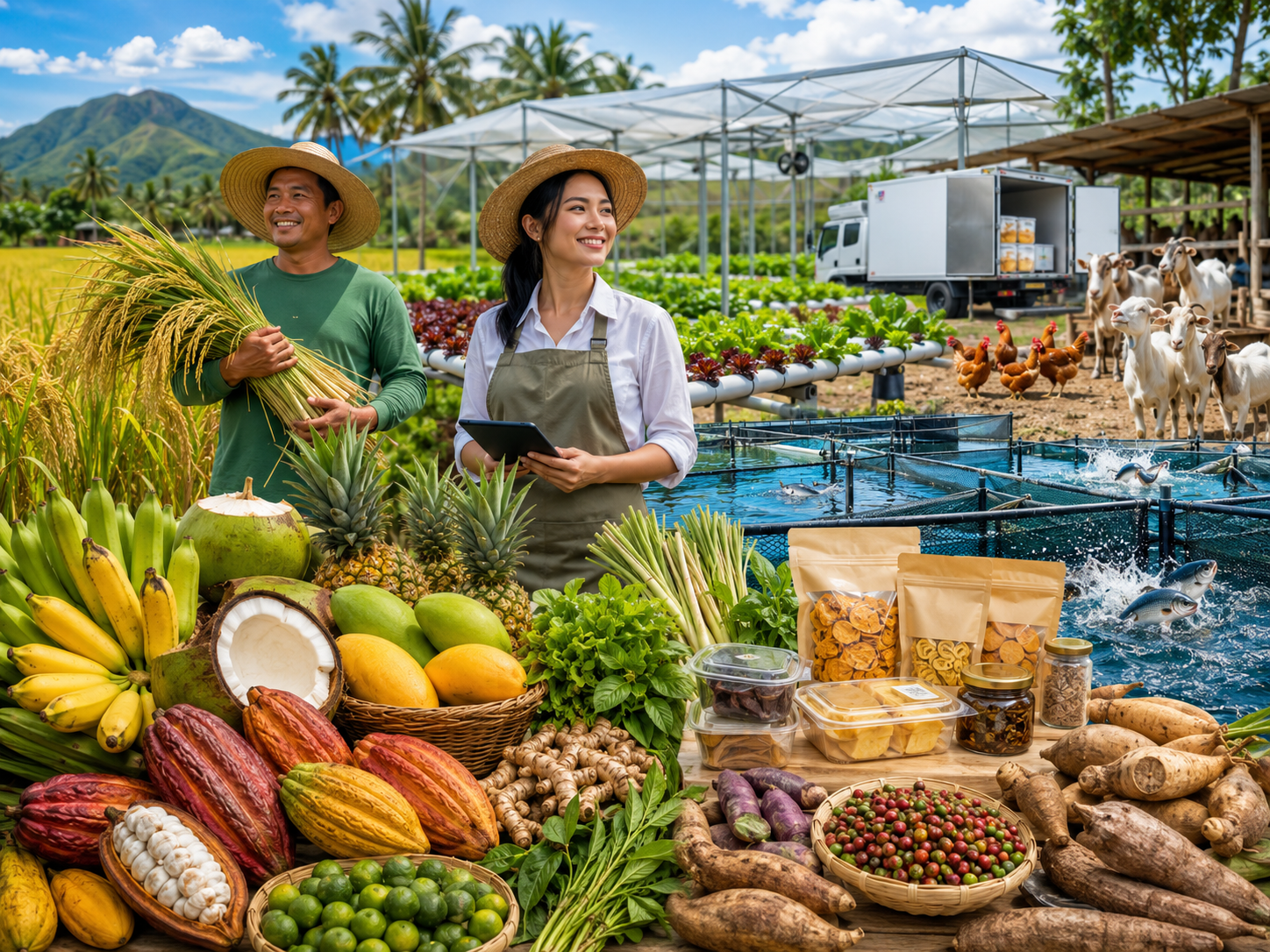
The agribusiness sector offers Filipino entrepreneurs a wide range of income-generating possibilities because it connects agriculture with production, marketing, processing, transportation, and retail. In the Philippines, agriculture is not only a livelihood for millions of families but also a foundation for food supply and rural economic activity. Entrepreneurs who understand this sector can build businesses that serve both local communities and larger commercial markets.
One area with strong potential is the cultivation of premium and specialty crops. Instead of competing only in low-margin traditional crops, entrepreneurs can focus on products with stronger market value. Examples include cacao, coffee, organic vegetables, culinary herbs, mushrooms, pineapple, mango, dragon fruit, coconut, and calamansi. These products can be sold to households, food companies, hotels, restaurants, and exporters. With better packaging and consistent quality, local produce can move beyond wet markets and enter supermarkets, online platforms, and specialty stores.
Urban and controlled-environment farming is also becoming more attractive. Many cities have rising demand for fresh, safe, and traceable food. Hydroponic vegetables, greenhouse-grown herbs, and container farming can serve customers who value freshness and convenience. Although these systems require higher initial investment, they can reduce exposure to unpredictable weather and allow year-round production. Entrepreneurs near urban centers can benefit from lower delivery costs and faster access to buyers.
Food processing is another important opportunity. Many agricultural products in the Philippines are seasonal, which often causes oversupply during harvest and losses due to spoilage. Processing helps solve this problem by converting raw goods into higher-value items. Mangoes can become dried mangoes, purees, or juices. Cacao can become tablea, chocolate bars, or baking ingredients. Coconut can become oil, sugar, milk, chips, or flour. Fish can be processed into smoked, dried, canned, or frozen products. These value-added goods can be marketed locally or internationally.
Filipino entrepreneurs can also explore livestock and poultry ventures. Eggs, chicken, pork, goat meat, and dairy products remain important in Filipino diets. Opportunities exist in commercial poultry, native chicken raising, goat farming, backyard-to-commercial egg production, and meat processing. However, the sector requires careful disease control, proper housing, reliable feed supply, and compliance with local regulations. Entrepreneurs who invest in training and veterinary support are more likely to build stable operations.
Aquaculture deserves attention because seafood consumption is high in the Philippines. Bangus, tilapia, shrimp, mud crab, and seaweed can provide profitable business options. Seaweed farming is especially interesting because it supports multiple industries, including food ingredients, cosmetics, and pharmaceuticals. Fish farming can also be combined with processing, cold storage, and direct-to-consumer delivery to improve profitability.
Another growing field is agribusiness logistics. Farmers often face difficulty transporting products quickly and safely. Entrepreneurs can offer cold storage, refrigerated delivery, packing services, aggregation centers, and digital ordering platforms. These services help reduce waste and connect producers with restaurants, groceries, and households. A business does not always need to own a farm to profit from agribusiness; it can succeed by solving supply-chain problems.
Financing and training services are also needed in rural areas. Many farmers lack access to credit, modern farming techniques, and market information. Entrepreneurs can develop consulting services, input supply businesses, farm equipment rentals, or digital advisory platforms. These models can support farmers while creating sustainable revenue.
For Filipino entrepreneurs, agribusiness success depends on choosing the right product, understanding the target market, controlling costs, and building trust with buyers. The most competitive businesses are those that combine agricultural production with innovation, branding, technology, and efficient distribution.










Leave a Reply