The Philippines has emerged as one of Southeast Asia’s most dynamic markets, with technology playing a pivotal role in the business transformation process. As companies across the archipelago embrace new technologies, they are witnessing remarkable improvements in productivity, customer engagement, and overall operational efficiency. From small startups to large corporations, businesses are tapping into digital solutions to accelerate their growth and stay ahead of the competition.
The rise of digital platforms is a defining trend in the Philippine business landscape. E-commerce, for instance, has seen exponential growth in recent years. With platforms like Shopee, Lazada, and GCash, businesses are reaching an ever-growing consumer base, thanks to the increasing use of smartphones and internet connectivity. These platforms allow businesses to reach both urban and rural populations, making it easier for entrepreneurs to sell their products to a wider audience.
Moreover, the use of artificial intelligence (AI) and machine learning is becoming more prevalent in business operations. In the retail sector, AI-driven chatbots are providing customers with instant support, improving the overall shopping experience. AI algorithms also help businesses personalize marketing efforts by analyzing customer behavior and preferences, leading to more targeted advertising and higher conversion rates.
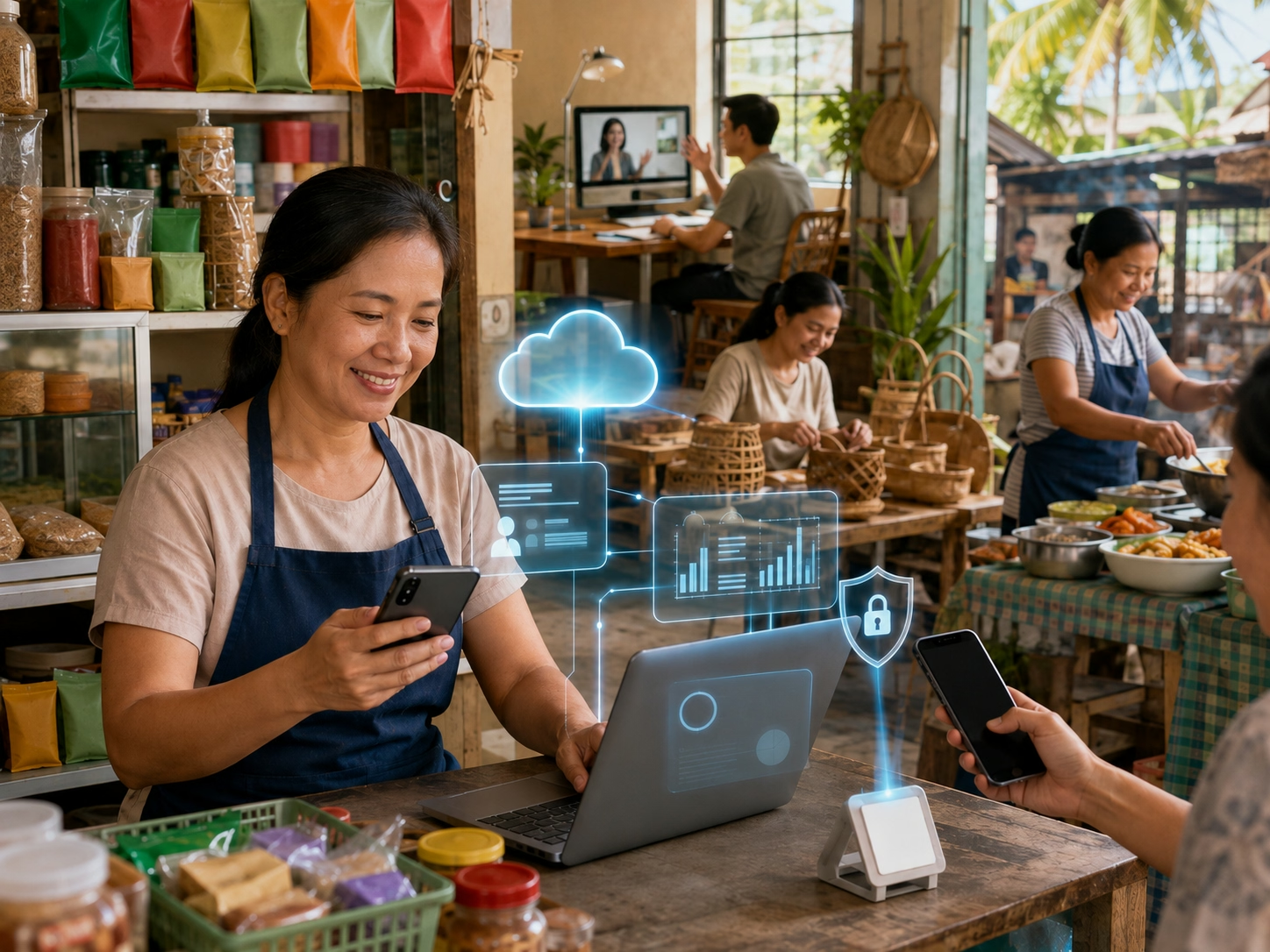
Cloud technology has played a crucial role in enabling business scalability in the Philippines. Startups and SMEs, which traditionally face challenges in terms of capital and infrastructure, are leveraging cloud-based services to access enterprise-level software without the need for significant upfront investments. This democratization of technology is empowering businesses to compete on a level playing field with larger, more established companies.
The financial services sector has also seen a dramatic transformation thanks to technology. Digital payment systems like PayMaya and GCash are revolutionizing how Filipinos conduct transactions, both online and offline. With the Philippines being a largely cash-based economy, mobile payment platforms have provided an alternative that is not only convenient but also secure and reliable. Businesses that integrate these payment systems into their operations are benefiting from increased efficiency, reduced transaction costs, and enhanced customer satisfaction.
Despite the many benefits, there are still challenges in adopting technology in the Philippines. Internet speed and connectivity remain a significant issue, especially in rural areas. However, with ongoing efforts from the government and the private sector to improve infrastructure, the digital divide is slowly being addressed. Additionally, the need for skilled talent to manage and maintain technological systems is growing, prompting businesses to invest in employee training and development.
In summary, technology is undoubtedly a key enabler of business growth in the Philippines. As more companies adopt digital tools and solutions, they are positioned to achieve higher productivity, greater customer satisfaction, and better overall performance. The continuous integration of technology in business operations is reshaping the future of the Philippine economy, creating new opportunities for innovation and growth.