

A Paradigm Shift in REIT Investing
The Philippine REIT reform of 2026 has fundamentally changed the investment landscape. Previously, REIT investors could only enjoy dividends from office and mall rents. Today, they have access to infrastructure assets with different risk and return profiles. SEC Memorandum Circular No. 1, Series of 2026, issued on January 8, 2026, expanded the definition of income-generating property to include assets with recurring and predictable cash flows, regardless of whether the income comes from rent or other passive sources.
This change aligns with a global shift toward real assets that produce stable income, especially amid uncertainty in conventional financial markets. For long-term investors, diversification into infrastructure through REITs offers exposure to sectors that were previously difficult to access without large capital.
Yield Profile of Infrastructure Assets
Analysts from the Investment & Capital Corporation of the Philippines (ICCP) highlight that falling interest rates will encourage more REIT listings because issuers will not need to offer very high dividend yields. The Bangko Sentral ng Pilipinas (BSP) has cut rates by 200 basis points since August 2024, with the policy rate reaching 4.5% by the end of 2025.
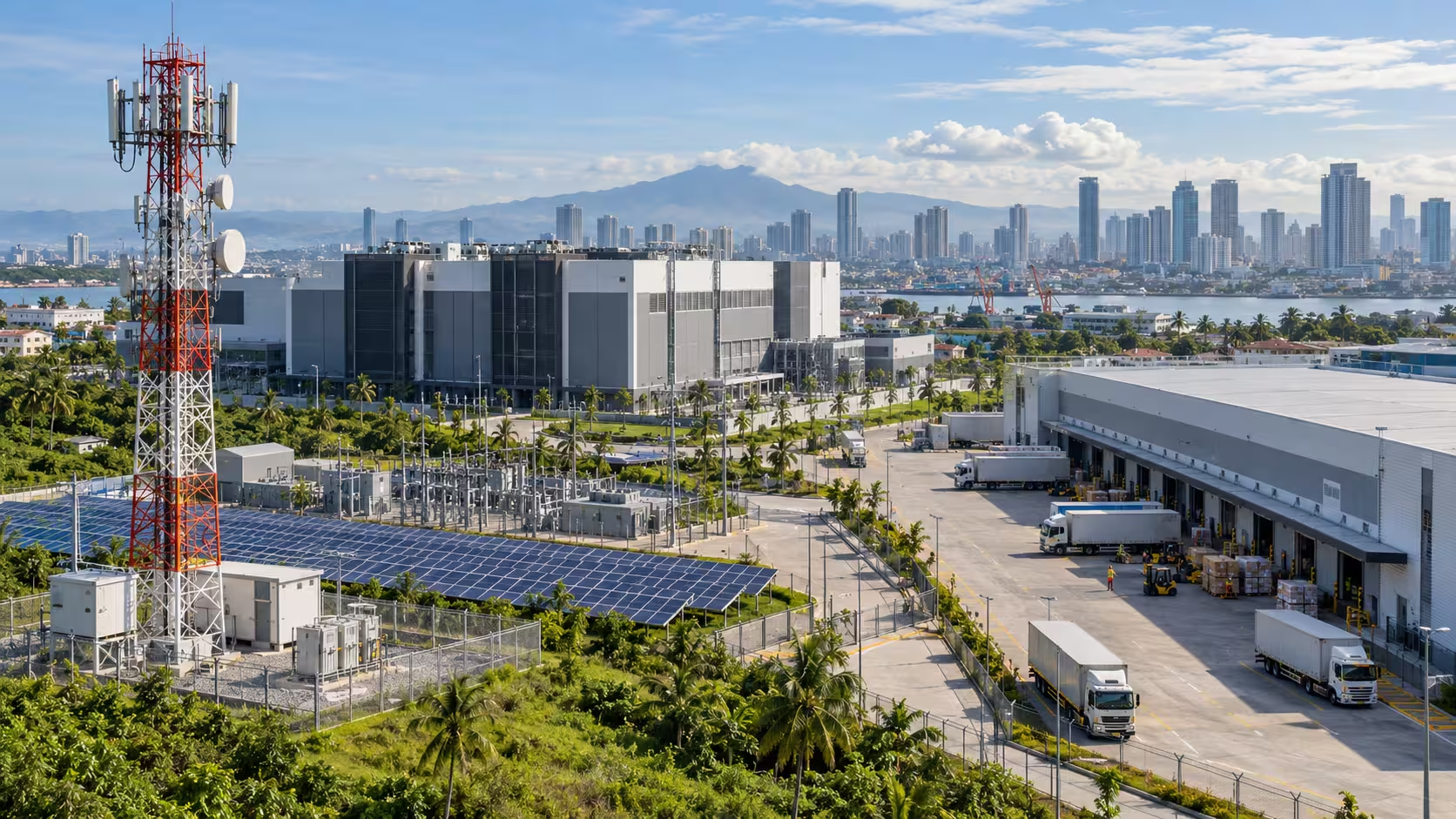
In a more accommodative interest rate environment, infrastructure REITs with inflation-indexed cash flows such as toll roads and energy facilities become increasingly attractive. Ocampo from ICCP stated that the rule changes could attract multi-billion-peso REIT offerings from toll road operators, water concessions, fiber optic network providers, cellular tower operators, and data center developers.
More Flexible Ownership Structures
One key innovation in this reform is the permission for REITs to own assets through SPVs and unlisted joint ventures, provided they hold at least two-thirds of voting shares. This gives sponsors flexibility to recycle capital without fully relinquishing control over strategic assets. However, it is important to note that dividends declared by SPVs or joint ventures received by the REIT are considered deductions from taxable income, and the minimum 90% distribution requirement of distributable income also applies to these entities.
This structure allows conglomerates to unlock value from mature infrastructure while retaining operational expertise. It also creates a pipeline for future listings as sponsors can seed REITs with assets that already have stable cash flows.











Leave a Reply