

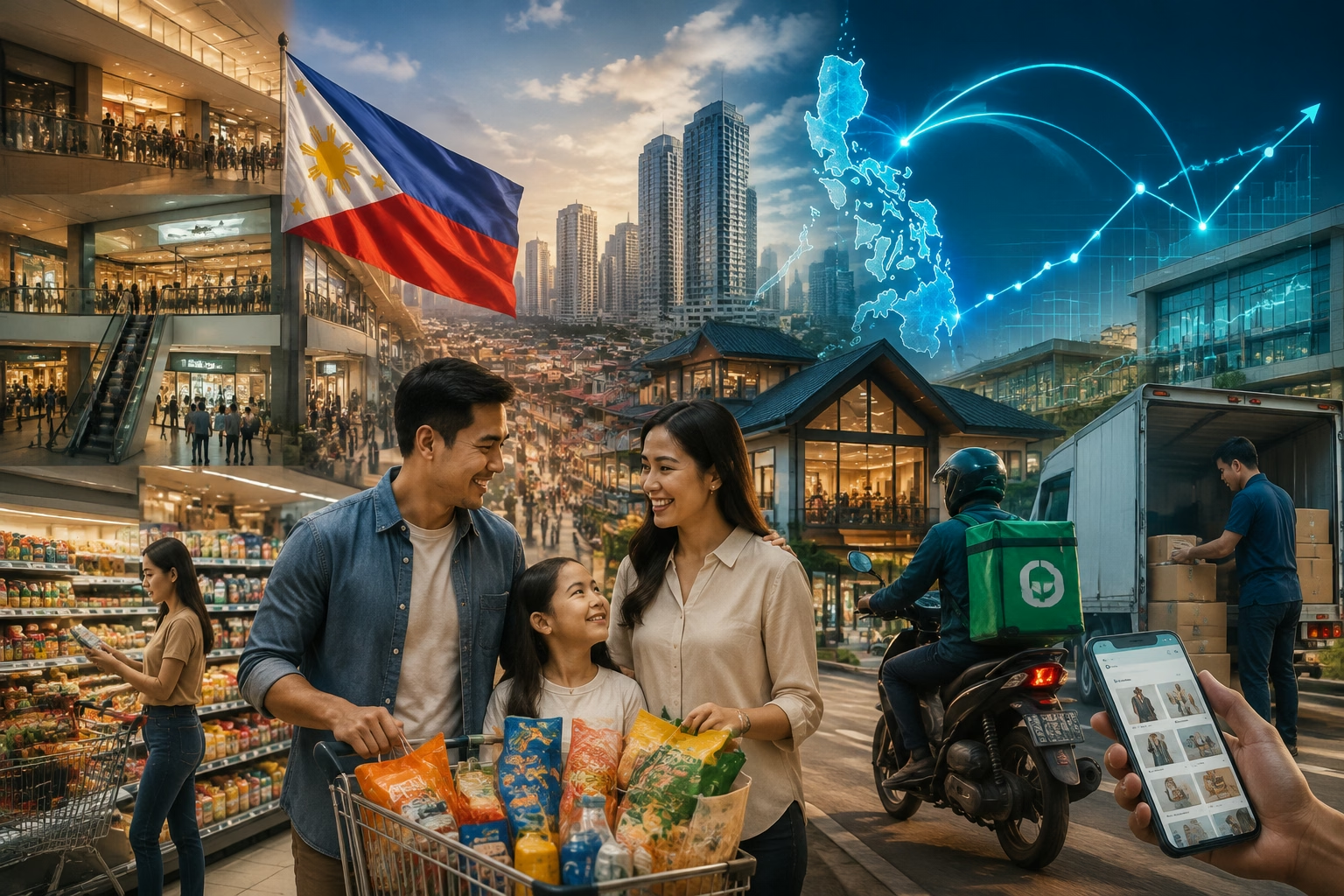
The Philippine economy has long been characterized by its consumption-driven nature. As we look toward 2026, the narrative is shifting from simple survival to discretionary spending. The Philippine consumer sector presents a complex puzzle for investors: while household spending remains the backbone of GDP, the specter of inflation and shifting global interest rates requires a more nuanced approach than simply buying the biggest mall operator. The real alpha in 2026 lies in identifying companies adapting to the “new normal” of consumer behavior.
The Power of the Peso: Remittance Flows
A key macro driver for 2026 remains the Overseas Filipino Worker (OFW) remittance flow. These inflows provide a steady base of demand for consumer staples and real estate. However, 2026 presents a currency nuance. A strong Peso, while good for importers, reduces the local purchasing power of remittance-receiving families.
Investors need to pivot toward companies that cater to the “aspirational” middle class rather than just the “survival” market. Fast-food chains, beverage companies, and mid-range fashion retailers are positioned to benefit as inflation stabilizes. The World Bank projects steady remittance growth, which will likely buffer the lower-income segment, but the real growth story is in the upper-middle-class demographic trading up.
Inflation and the Margin Squeeze
The lingering risk for consumer stocks is the cost of goods sold (COGS). While inflation has eased from its peaks, commodity prices remain volatile. Companies with strong pricing power—those that can pass costs to consumers without losing volume—will outperform. This favors established brands with high customer loyalty over generic or unbranded competitors.
The E-Commerce Synergy
The most significant opportunity in the Philippine retail space is the “Omnichannel” strategy. Pure online retailers have struggled with logistics, while pure offline retailers missed the digital boom. The winners of 2026 are legacy retailers who have successfully integrated their physical stores as fulfillment centers for online orders. This reduces last-mile delivery costs and improves inventory turnover. Stocks in this category are demonstrating robust same-store sales growth (SSSG) driven by data analytics and personalized marketing.









Leave a Reply