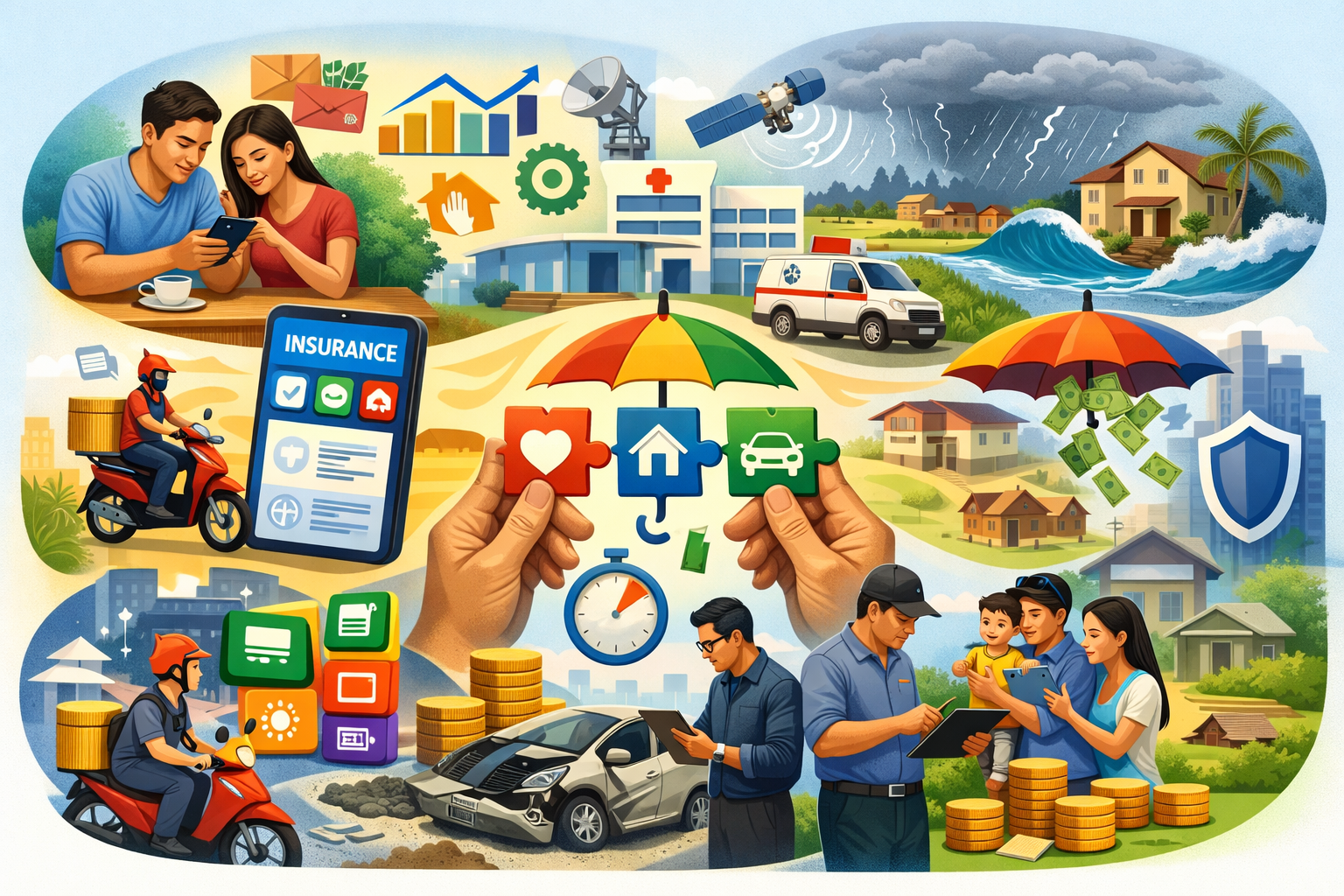
The Philippine insurance market is evolving from a primarily agent-driven, paperwork-heavy business into a more diversified ecosystem shaped by technology, partnerships, and inclusion-focused regulation. Economic growth, expanding middle-class aspirations, and constant exposure to natural hazards make financial protection highly relevant. At the same time, many citizens remain uninsured or underinsured due to affordability concerns, limited understanding of policies, and the perception that claims are difficult. Innovation is increasingly aimed at solving those barriers rather than simply adding new product names.
From traditional channels to multi-platform distribution
Historically, agency networks and brokers played the central role in selling policies. These channels remain important, particularly for higher-value life products and corporate coverage. However, distribution is now widening through bancassurance, digital marketplaces, and platform partnerships. Banks can offer insurance alongside savings and loans, while mobile apps and online aggregators enable customers to compare and purchase coverage without face-to-face meetings. The shift is significant because distribution costs have long been a major driver of premiums; lowering those costs can make protection more accessible.
Product innovation shaped by Filipino cash-flow patterns
A key insight in the Philippines is that many households manage money in short cycles—daily, weekly, or per pay period. This favors insurance with flexible payment schedules, small premium “top-ups,” and straightforward benefits. Microinsurance fits well here, but mainstream insurers are also experimenting with modular coverage: customers can start with a basic plan and add riders for hospitalization support, accident protection, or family coverage as budgets allow. Clear wording and simplified exclusions are becoming competitive advantages, particularly for first-time policyholders.
Digital servicing and faster claims as a trust-builder
Trust is a decisive factor in insurance adoption. Innovations that reduce claims uncertainty often have an outsized impact on demand. Digital claims submission, electronic document upload, and mobile-based status tracking can make the process feel more predictable. For motor and property lines, remote assessment using images and geotagging can shorten cycle times. Some firms deploy analytics to flag potentially fraudulent claims while allowing clean claims to move faster—balancing risk control with customer satisfaction.
Climate and agriculture: room for parametric approaches
The Philippines’ exposure to typhoons, floods, and droughts makes disaster-related protection essential. Traditional indemnity insurance can be slow after widespread catastrophes because adjusters and documentation become bottlenecks. Parametric insurance—where payouts are triggered by measurable events like wind speed or rainfall indices—offers a different model that can deliver quicker liquidity. In agriculture, index-based covers can help farmers recover input costs and replant sooner. Designing these products requires careful calibration so triggers match real losses, and strong customer education so people understand what does and does not activate a payout.
Inclusion challenges: literacy, identity, and informal work
Increasing access isn’t only a pricing issue. Insurance literacy remains uneven, and many workers earn income informally, complicating underwriting and premium collection. Digital identity verification and e-payment rails help, but insurers also need community partnerships, vernacular communication, and customer support that doesn’t assume high financial sophistication. Over time, the winners are likely to be firms that treat inclusion as a full operating model—product design, distribution, servicing, and claims—rather than a standalone “low-cost” line.