

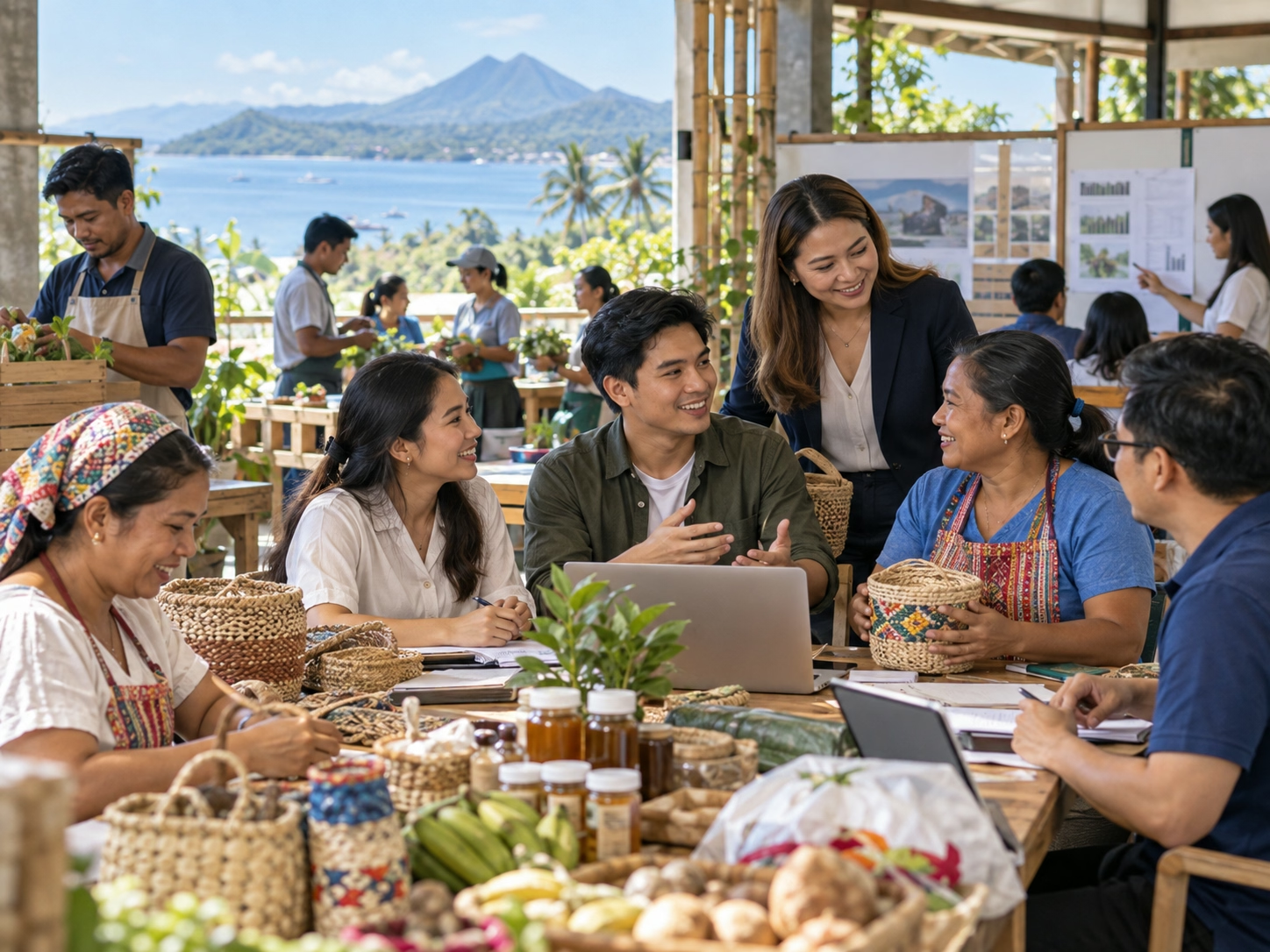
The Philippines is experiencing a quiet but profound economic transformation. Across the archipelago, micro, small, and medium enterprises (MSMEs) are abandoning the traditional linear model of “take-make-dispose” in favor of circular approaches that regenerate resources rather than deplete them.
The Policy Imperative for Circularity
In August 2026, experts convened at a symposium titled “Circular Economies in Action: Localizing APEC’s Vision in the Visayas” to call for a systemic shift toward circular economic models. Dr. Betty Cernol-McCann, President of Silliman University, articulated the urgency: “Our current practices prioritize resource extraction and disposal, but these are not sustainable. We need to transition to a system where resources are used wisely, reused effectively, and kept out of landfills and waterways”.
The symposium highlighted the potential of circular economy approaches to drive business innovation in manufacturing, agriculture, and tourism—sectors where resource efficiency and environmental stewardship are crucial for long-term viability.
EU-Funded Initiative Transforms Coconut MSMEs
One of the most significant circular economy interventions in the Philippines is the SWITCH Maguindanao project, co-funded by the European Union and implemented by the Philippine Red Cross and Spanish Red Cross. Launched in 2025 and running until June 2028, this 42-month initiative transforms coconut MSMEs into circular, sustainable, and inclusive social enterprises.
The project works with small coconut farmers across two municipalities in Maguindanao, addressing a critical inefficiency: despite coconut’s versatility in producing coco husk, coir, and other byproducts, farmers’ limited access to training and equipment has resulted in wasteful resource use.
Through this initiative, 1,000 coconut producers integrating at least 20 MSMEs will improve productive sustainability by adopting new technologies and equipment. The project strengthens access to credit and bank financing while promoting inclusive green and circular economy practices across the entire value chain.
Community Enterprises Demonstrating Circular Principles
The circular economy is taking root not only through large-scale projects but also through community-led initiatives. In Oriental Mindoro, the Dao Waterlily Association has demonstrated how environmental protection and livelihood generation can reinforce each other. With 38 members, the association produces waterlily bags and handicrafts, grows mushrooms and vegetables, and provides ecotourism services including kayak rentals and floating cottages.
Through the Biodiversity-Friendly Enterprise program, the group received solar panels and a water pump, enabling improved operations and increased production. As DENR Oriental Mindoro head Annabelle M. Barquilla explained, “The project focuses on protecting important natural areas in Mindoro while helping communities earn in ways that do not harm the environment”.
Financing the Circular Transition
The transition to circular business models requires accessible financing, particularly for MSMEs with limited capital. The Philippine government has responded with incentives including tax breaks, grants, and subsidies for companies that reduce waste, design for recyclability, or invest in renewable technologies.
These financial instruments are complemented by private sector initiatives. Villgro Philippines, an impact incubator, has supported more than 230 enterprises since 2019, with over 85% being women-led. Its NatureNest Accelerator received 40 applications from enterprises spanning sustainable aquaculture, agroforestry, ecotourism, and forest stewardship across Luzon, Mindanao, and the Visayas.
The circular economy in the Philippines is not merely an environmental strategy—it is an economic imperative that is reshaping how businesses operate, creating new value streams, and building resilience in communities that have historically been vulnerable to resource depletion and climate impacts.








Leave a Reply