

The Architecture of Accessibility
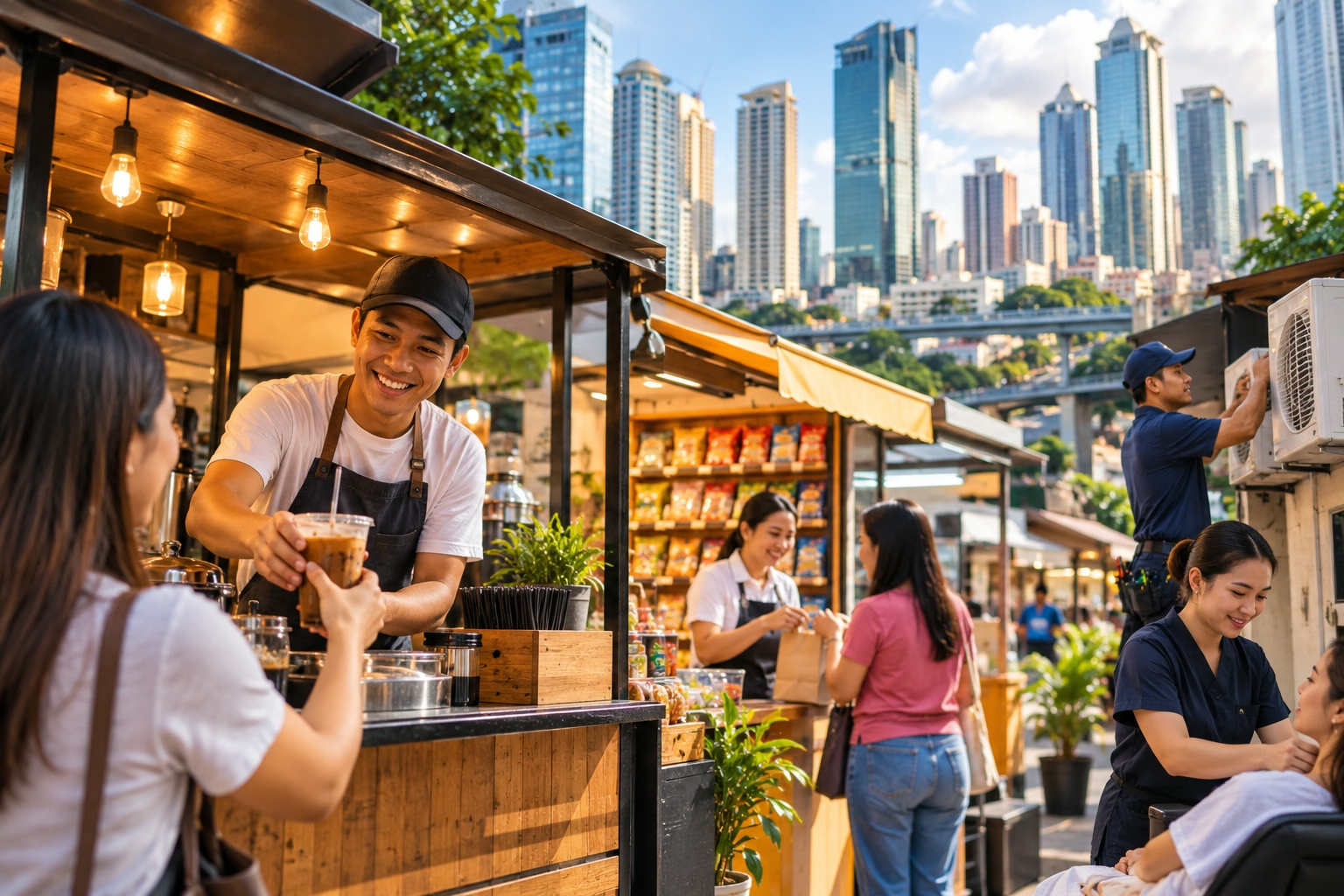
The defining feature of the 2026 micro-franchising boom is not just the price point, but the physical re-engineering of the store itself. Brands are abandoning the traditional brick-and-mortar template in favor of modular, portable, and hyper-compact designs that slash capital expenditure and operational complexity.
Binalot’s Smart Box: A Store in Four Weeks
Filipino fast-food chain Binalot has introduced the “Smart Box,” a fully equipped modular store measuring 6×3 meters. This unit includes a kitchen, service area, branding, and dining facilities, and can be constructed and made operational in just four to six weeks. The strategic advantage is profound: the store is relocatable. If a location underperforms, the franchisee can physically move the asset to a better site, a flexibility that traditional franchises cannot offer. Binalot aims to end 2026 with over 60 franchises, with 10 utilizing this Smart Box concept, targeting tourist destinations like Palawan and Boracay. The company frames this as “democratizing entrepreneurship,” allowing smaller players to compete in the food space without massive real estate commitments.
Pickup Coffee and the Lean Scale-Up
The coffee segment is witnessing a parallel revolution. Pickup Coffee, which officially opened for franchising in 2026, targets 800 stores by year-end. Its model relies on outdoor carts and small indoor kiosks. The capital expenditure ranges from PHP 1.7 million for a 12 to 20 square meter indoor kiosk to PHP 2 million for an outdoor cart, with larger café formats reaching PHP 4 million. Crucially, franchisees in strong locations could recover their investment within 18 to 24 months. By avoiding the overhead of full-scale cafés, Pickup Coffee has kept fixed costs low enough to weather economic volatility, a strategy that is now being replicated across the F&B sector.
The Micro-Franchise Cost Spectrum
The financial entry point for these formats is starkly different from traditional franchises. While a full quick-service restaurant might require millions, micro-formats are accessible at a fraction of the cost. Some food and beverage builds start as low as PHP 25,000, with the lightest kiosk formats designed for high-velocity pedestrian traffic. Potato Corner, a pioneer in the kiosk space, offers school carts starting at PHP 250,000, a price point that has fueled its expansion to over 2,100 stores in the Philippines, 80% of which are franchised.
This modular approach is not just about cost-cutting; it is a strategic response to a market that demands agility. By decoupling the brand experience from a fixed location, micro-franchisors are creating a new asset class: the mobile, scalable, and highly liquid business unit.








Leave a Reply