

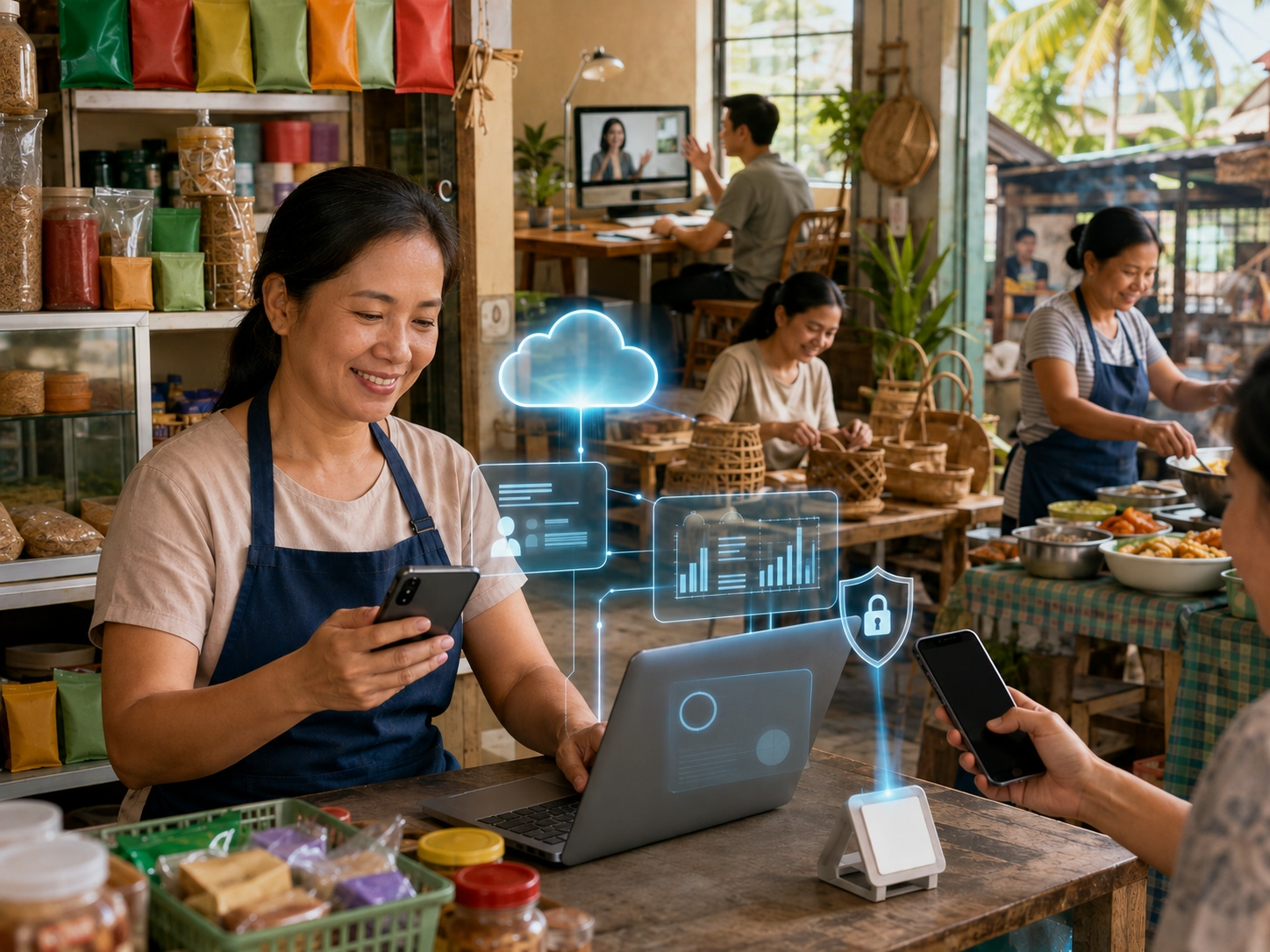
The payment landscape in the Philippines has undergone a radical metamorphosis. If at the beginning of this decade cash still reigned, by 2026 digital payment infrastructure has become the lifeblood of daily business transactions. The phenomenon of “Tita paying using QR” has become a common sight, not only in upscale shopping centers in Makati but also in palengke (traditional markets) in Iloilo Province. The main drivers of this change are full interoperability through the QRIS PH standard championed by the Bangko Sentral ng Pilipinas (BSP) and aggressive innovation from fintech players.
Interoperability: The Key to Cashless Victory
Before 2026, one of the biggest barriers to digital adoption was the fragmentation of payment systems. A GCash user found it difficult to pay a merchant that only displayed a Maya QR code, and vice versa. The implementation of the national QRIS PH standard has broken down those walls. Now, one standard QR code can accept payments from any bank or any e-wallet. For business owners, this is a huge blessing. A small coffee shop no longer needs to display three different QR placards; just one placard that connects directly to their business account. This significantly reduces administrative costs and speeds up daily financial reconciliation.
Impact on Real Business Operations
The efficiency effect of cashless transactions is strongly felt in the logistics and distribution sectors. According to data compiled by the Bangko Sentral ng Pilipinas (BSP), the volume of digital transactions in the country has surged dramatically and is projected to cover more than 60 percent of all retail transactions by the end of 2026. Inter-island truck drivers no longer need to carry large amounts of cash for toll fees, diesel, or meal allowances. All transactions are done through applications connected to a centralized corporate accounting system. This reduces the risk of losing money and speeds up audit processes.
The Emergence of Embedded Finance
The most interesting trend in 2026 is the rise of embedded finance, or financial services integrated into non-financial platforms. Major e-commerce platforms like Lazada and Shopee are now not only places to sell but also offer instant working capital loans (BNPL or PayLater) embedded directly into the seller’s shopping flow. An online clothing seller in Divisoria can apply for a loan to purchase new stock directly from their sales dashboard, with automatic AI-based approval in minutes. This eliminates dependence on loan sharks or slow conventional bank processes. The speed of capital access triggers exponential growth for micro-scale businesses in the Philippines.
Fintech developments in 2026 are not just about replacing paper money with digital numbers. More than that, this ecosystem has built a more equitable wealth distribution channel, enabling anyone, from anywhere, to actively participate in the national digital economy.








Leave a Reply