

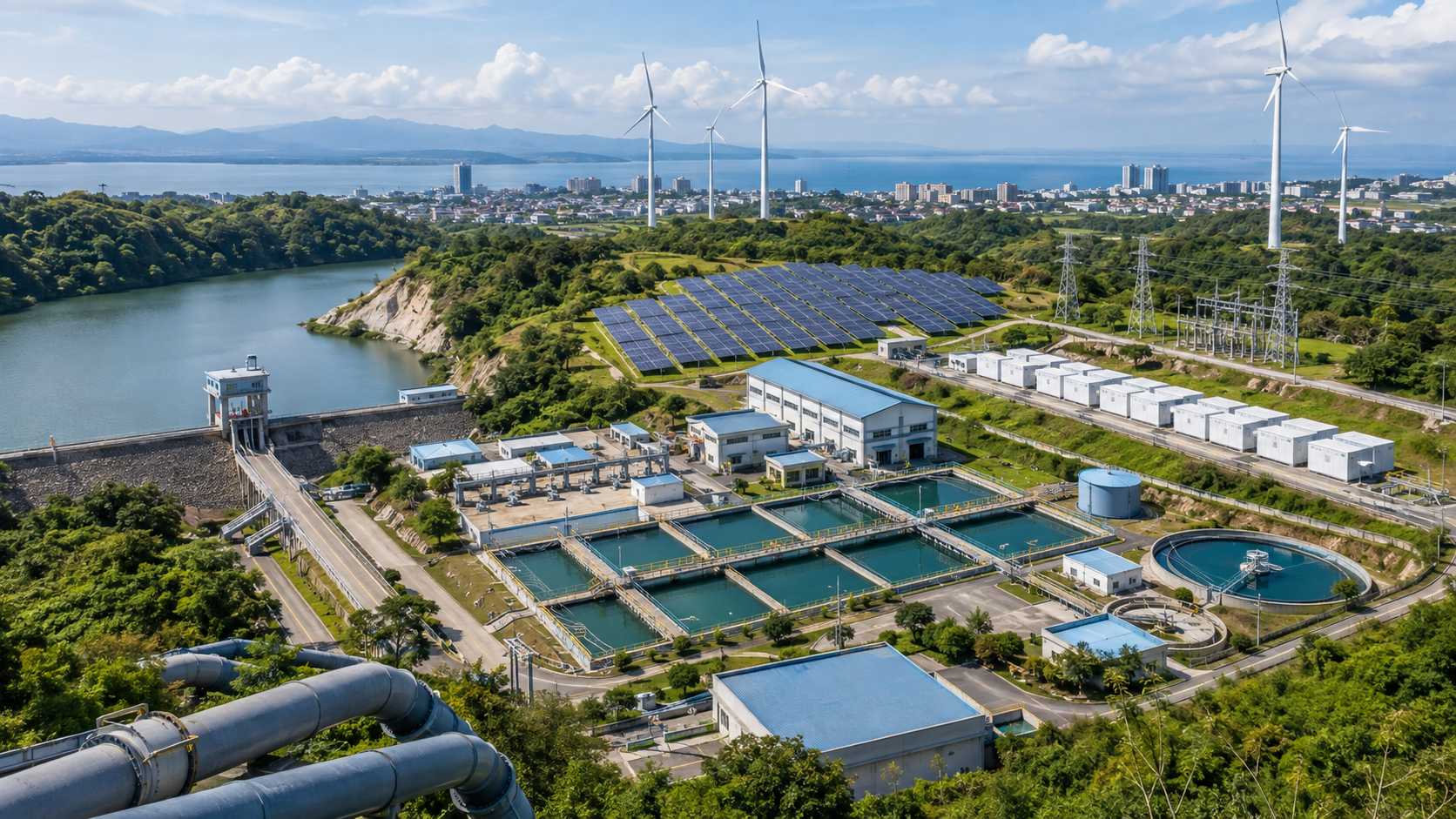
Water security and clean energy are converging as top infrastructure priorities in the Philippines in 2026. After years of underinvestment, the government is now using public-private partnerships to expand water supply systems, improve wastewater treatment, and integrate more renewable energy into the grid. According to the Department of Energy, the country aims to increase the share of renewables in its power mix to 35 percent by 2030, and private capital is essential to reach that target.
Water PPPs Beyond Metro Manila
Metro Manila’s successful water concession model is now being replicated in other regions. Private water companies are bidding for bulk water supply projects in Cebu, Iloilo, and Davao. These projects involve building dams, treatment plants, and distribution networks under long-term contracts. The government is also addressing non-revenue water, or water lost through leaks and theft, by requiring private operators to meet strict efficiency targets.
Bulk Water Supply and Wastewater
In 2026, several bulk water supply PPPs are in advanced stages. Private developers are constructing reservoirs and treatment facilities that will serve growing urban populations. Wastewater is another urgent challenge. Many Philippine cities lack proper sewage treatment, leading to pollution of rivers and coastal areas. PPPs are now being structured for septage management and centralized sewage treatment plants. Private operators bring technical expertise and capital, while government agencies provide regulatory oversight and land access.
Renewable Energy Grid Integration
The renewable energy sector is seeing strong private participation in 2026. Solar, wind, and hydropower projects are being developed through joint ventures between local conglomerates and foreign energy firms. The government has opened the grid to more private participation through competitive bidding for ancillary services and transmission upgrades. This is critical because renewable energy sources are variable, and the grid needs modern infrastructure to maintain stability.
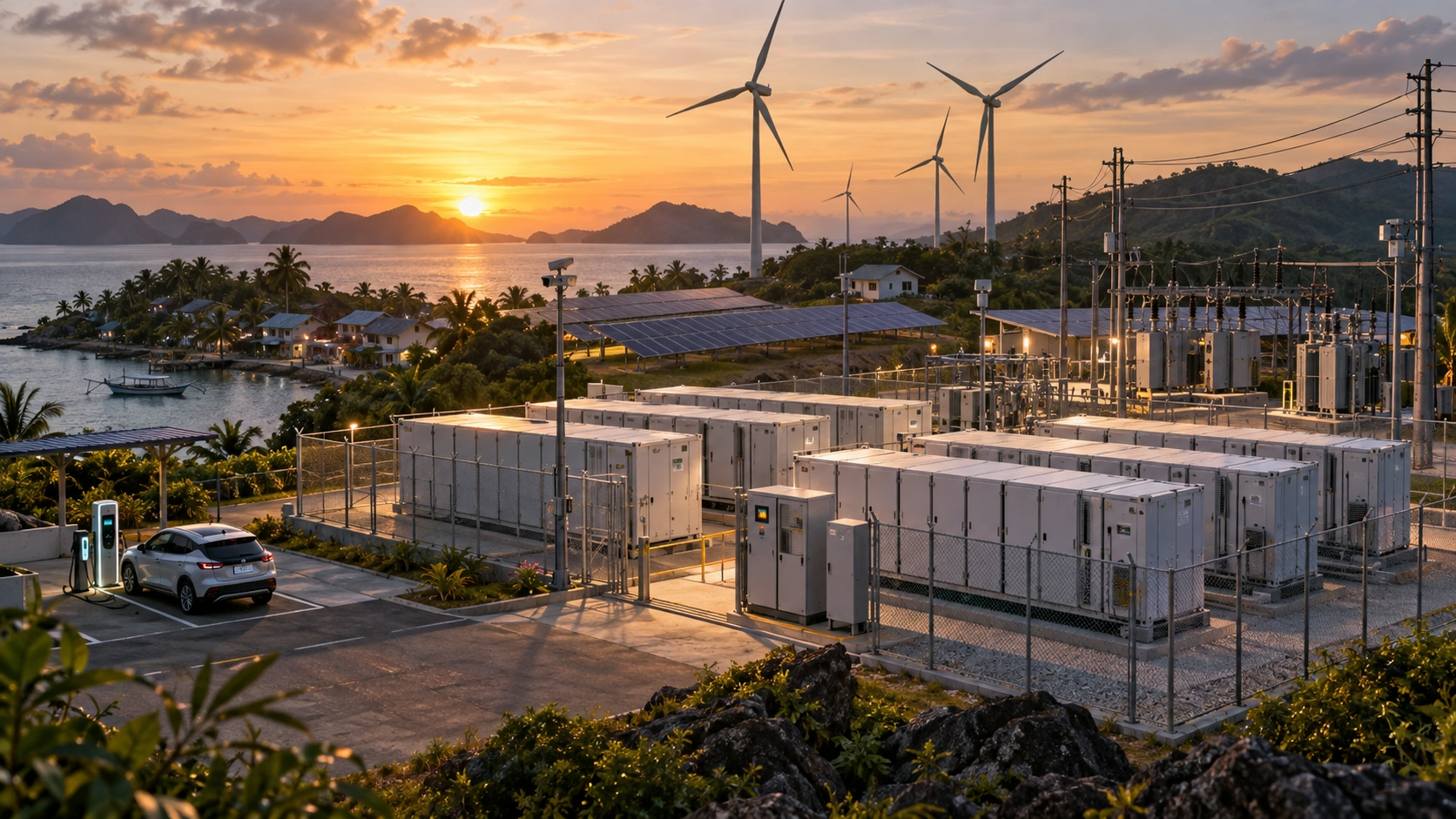
Private companies are also investing in battery energy storage systems, which help store excess solar and wind power for use during peak demand. The Department of Energy has approved several storage projects as part of the national energy plan. These investments reduce dependence on imported fossil fuels and create new jobs in rural areas.
The convergence of water and energy infrastructure under PPP frameworks is a sign of maturity in Philippine infrastructure planning. By aligning private incentives with public goals, the government is tackling two of the most pressing challenges facing the country: water scarcity and energy security. As 2026 continues, the success of these partnerships will shape the Philippines’ resilience and long-term growth.






Leave a Reply