


A Capital Inflow Reversal
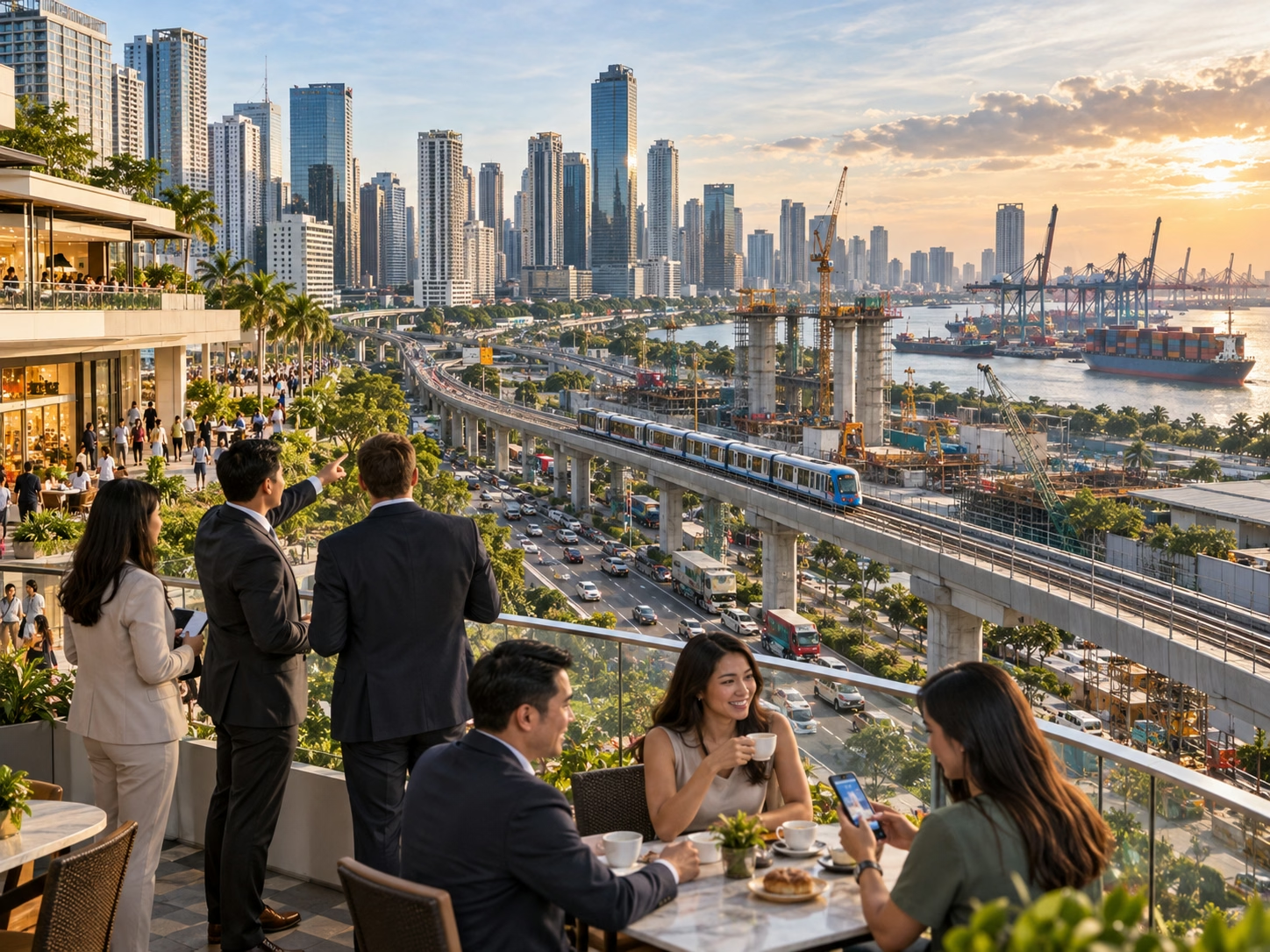
After years of subdued foreign participation, the Philippines registered a notable upswing in foreign direct investment in the first five months of 2026. Data from the Bangko Sentral ng Pilipinas showed net FDI inflows hitting $5.8 billion, with 35 percent channeled into infrastructure and construction-related enterprises (BSP FDI Report 2026). This capital inflow did more than build roads and bridges; it reshaped the earnings profiles of the country’s largest banks and property developers, whose shares are heavily weighted on the Philippine Stock Exchange.
Banking on Infrastructure Finance
Large-scale infrastructure requires syndicated loans and project finance facilities. BDO Unibank and Bank of the Philippine Islands, the nation’s top lenders, reported a combined 18 percent increase in corporate loan books during the first quarter, with infrastructure-related credit accounting for the largest single segment. As interest income swelled, both banks enjoyed double-digit share price gains, outpacing the PSEi. Analysts at international brokerages upgraded their price targets, citing the loan-quality profile of infrastructure credits, which are often backed by government guarantees or user-fee revenue. The perception of lower default risk translated into a re-rating of banking stocks, which then lifted the broader financials sub-index.
Property Developers Turn Industrial
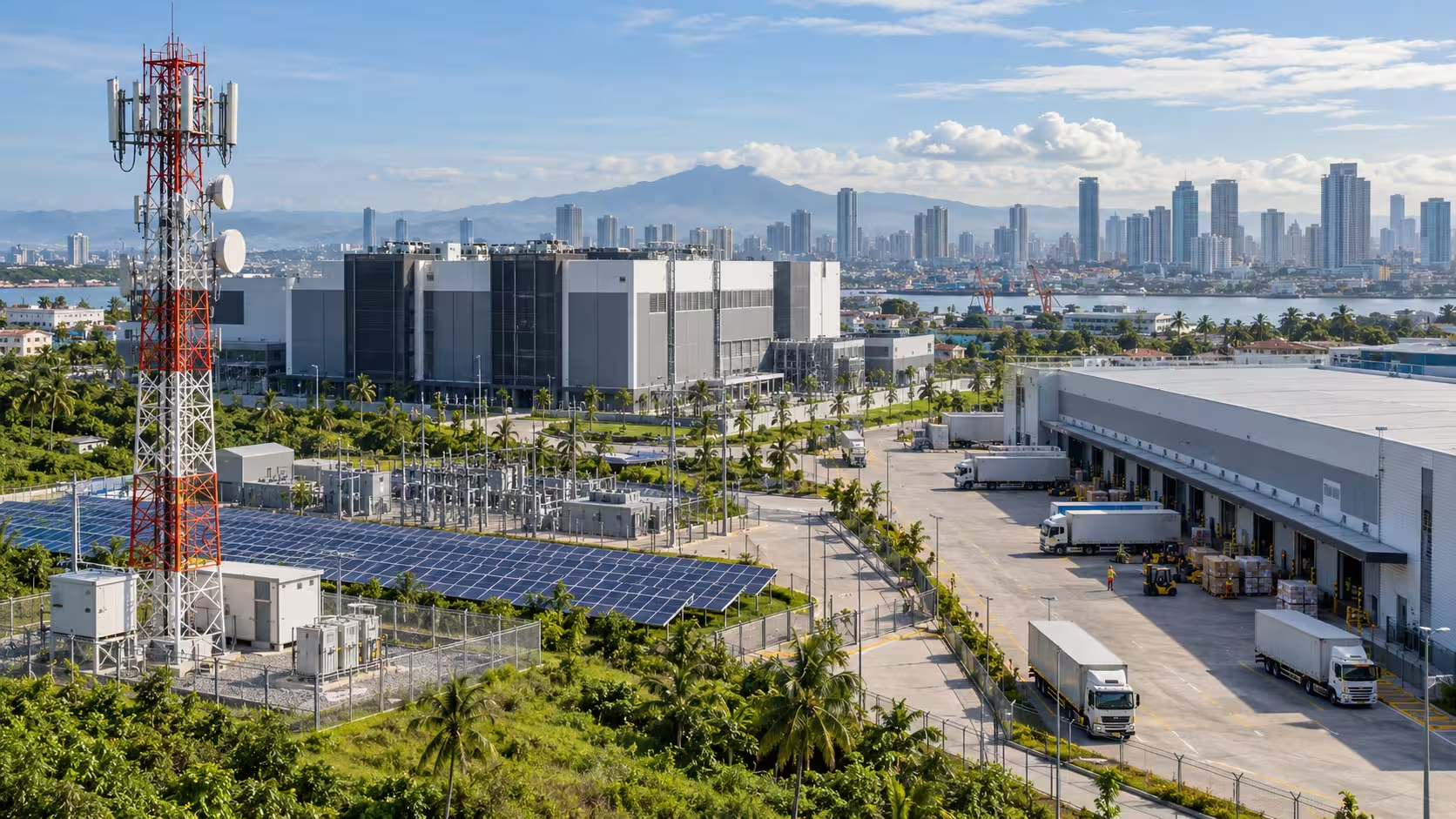
The FDI influx also redirected the strategies of major property firms. Ayala Land and SM Prime Holdings accelerated their industrial and logistics estate developments to serve the supply-chain needs of infrastructure contractors and manufacturing investors. In Q2 2026, Ayala Land broke ground on a 200-hectare logistics hub adjacent to the North-South Commuter Railway alignment, a project partly funded by a Japanese infrastructure consortium. Shares of both developers gained as investors recognised that infrastructure creates demand not only for residential housing near transit nodes but also for warehousing, data centres, and cold-storage facilities. The narrative shifted from traditional mall and office leasing to an “infrastructure-anchored” growth story.
Spillover to the Services Sector
Foreign engineering and consultancy firms that entered the Philippines alongside infrastructure projects began listing on the PSE or partnering with local companies, widening the investable universe. This trend expanded market capitalisation and gave institutional investors more ways to play the infrastructure theme beyond contractors. The PSE itself reported that the market welcomed its first pure-play infrastructure services listing in March 2026, which saw its IPO oversubscribed by seven times.
A More Resilient Equity Story
Robust FDI reduces the economy’s reliance on remittance-driven consumption and creates a more diversified earnings base for the stock market. Companies that benefit from infrastructure FDI — banks, property developers, and services firms — now hold a larger collective weighting in the PSEi, making the index less volatile. For global fund managers, the Philippine equity story in 2026 increasingly hinges on the multiplier effects of foreign capital deployed into concrete, steel, and digital infrastructure. The BSP data suggest that this trend is still gathering momentum, providing a long-duration catalyst for equities.








Leave a Reply