


Banking Habits Are Changing Faster Than Bank Branches
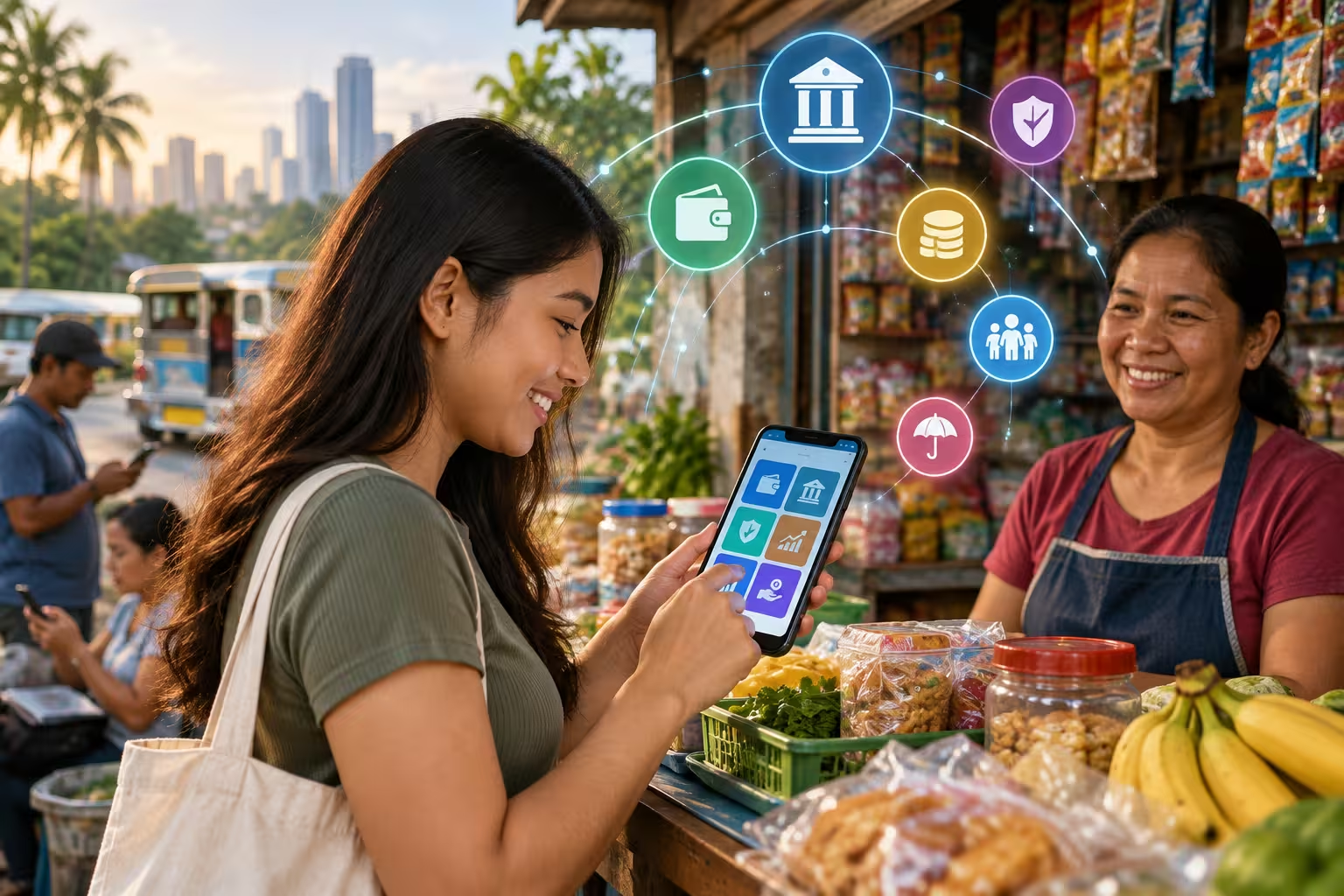
The relationship between Filipino millennials and financial institutions is entering a new stage. For decades, a bank account was associated with branch visits, passbooks, forms, and fixed operating hours. For today’s working-age millennials, the preferred financial relationship is increasingly built around an app that remains available throughout the day.
This is more than a technology trend. It reflects how many Filipinos now earn and spend money. Remote employment, freelance projects, online retail, ride-hailing services, digital subscriptions, and cashless payments have created financial routines that do not always fit traditional banking models.
Traditional institutions have responded by improving their digital channels, while mobile-centered competitors have entered the market with simplified account opening and app-based transactions. Maya Bank, GoTyme Bank, CIMB Bank Philippines, Tonik, UnionDigital Bank, and UNO Digital Bank are among the names that have contributed to a more competitive landscape.
The Bangko Sentral ng Pilipinas reported that digital transactions represented more than half of retail payment volume in 2023. This milestone reflected years of expansion in account-to-account transfers, QR payments, merchant transactions, and mobile finance. More information about the country’s policy direction is available through the BSP’s Digital Payments Transformation Roadmap.
The Appeal Goes Beyond Avoiding Queues
Millennials are not choosing digital services solely because they dislike bank lines. Many want financial products that respond to the way they already organize their lives.
A single phone may be used for work, shopping, transportation, communication, and entertainment. Financial management naturally follows the same pattern.
Modern platforms can allow users to monitor spending, send money instantly, pay utilities, create savings targets, and receive transaction notifications. For people supporting parents or relatives, fast transfers can also simplify regular family obligations.
Digital Accounts Can Make Saving More Intentional
One major advantage of mobile banking is visibility. Instead of checking finances occasionally, users can view balances and transactions almost immediately.
Some platforms allow customers to create separate savings goals or automate transfers after payday. This structure may be helpful for millennials preparing for home ownership, building emergency funds, financing further education, or planning major family expenses.
High advertised rates can attract attention, but they deserve careful reading. Promotional returns may apply only under certain conditions or for a limited period. Customers should compare the complete product, including fees, limits, access to funds, customer service, and deposit protection.
Easier Borrowing Requires Stronger Financial Discipline
Another significant development is the growth of app-based credit. Digital application processes can benefit consumers who need faster decisions or have difficulty fitting branch visits into their schedules.
Yet speed changes the psychology of borrowing. When credit can be requested in minutes, consumers may focus on immediate approval rather than long-term cost.
Before accepting any loan, borrowers should review the effective interest rate, service charges, late-payment penalties, installment period, and total repayment amount. This is especially important for people managing several obligations across banks, credit cards, lending applications, and buy-now-pay-later services.
Trust Is Becoming a Competitive Advantage
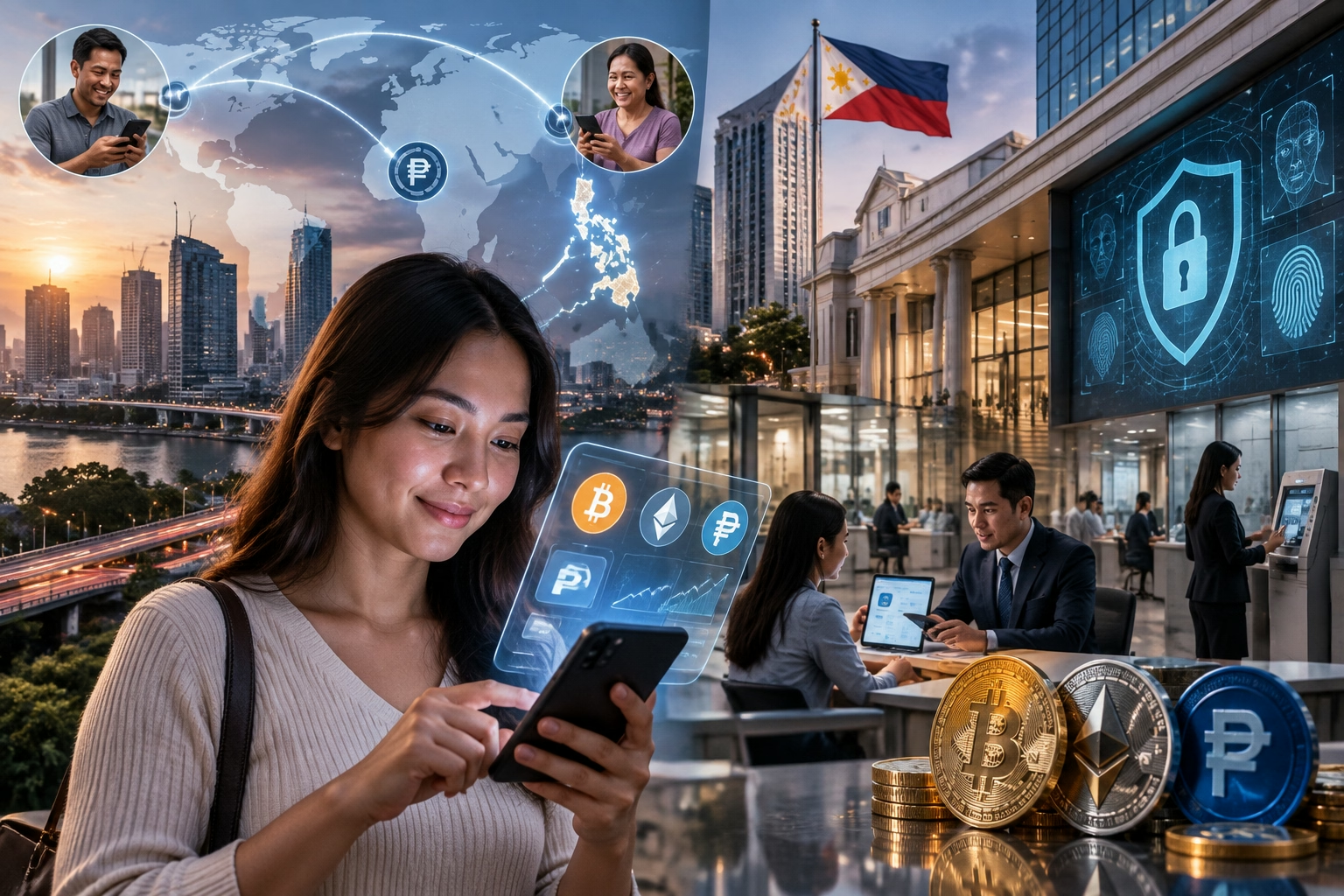
The next battle in Philippine digital finance will not be decided only by attractive interfaces. Security, reliability, and transparency are becoming equally important.
Phishing attacks and fraudulent messages often imitate legitimate financial companies. Criminals may create urgency by claiming that an account has been suspended or that a payment requires immediate verification.
Millennials should treat unexpected requests for passwords and one-time codes as warning signs. Official apps should be downloaded through legitimate stores, and suspicious messages should be checked through verified support channels.
The most valuable financial platform is ultimately the one that helps users make better decisions. Convenience can attract a customer, but trust, fair pricing, and useful financial tools are more likely to keep that customer over the long term.









Leave a Reply