In the Philippines, corporate philanthropy has evolved from a mere act of charity to a well-integrated approach aimed at fostering sustainable community development. Various companies, particularly large corporations, are using their financial resources and expertise to address pressing issues within local communities, contributing to their growth and empowerment.
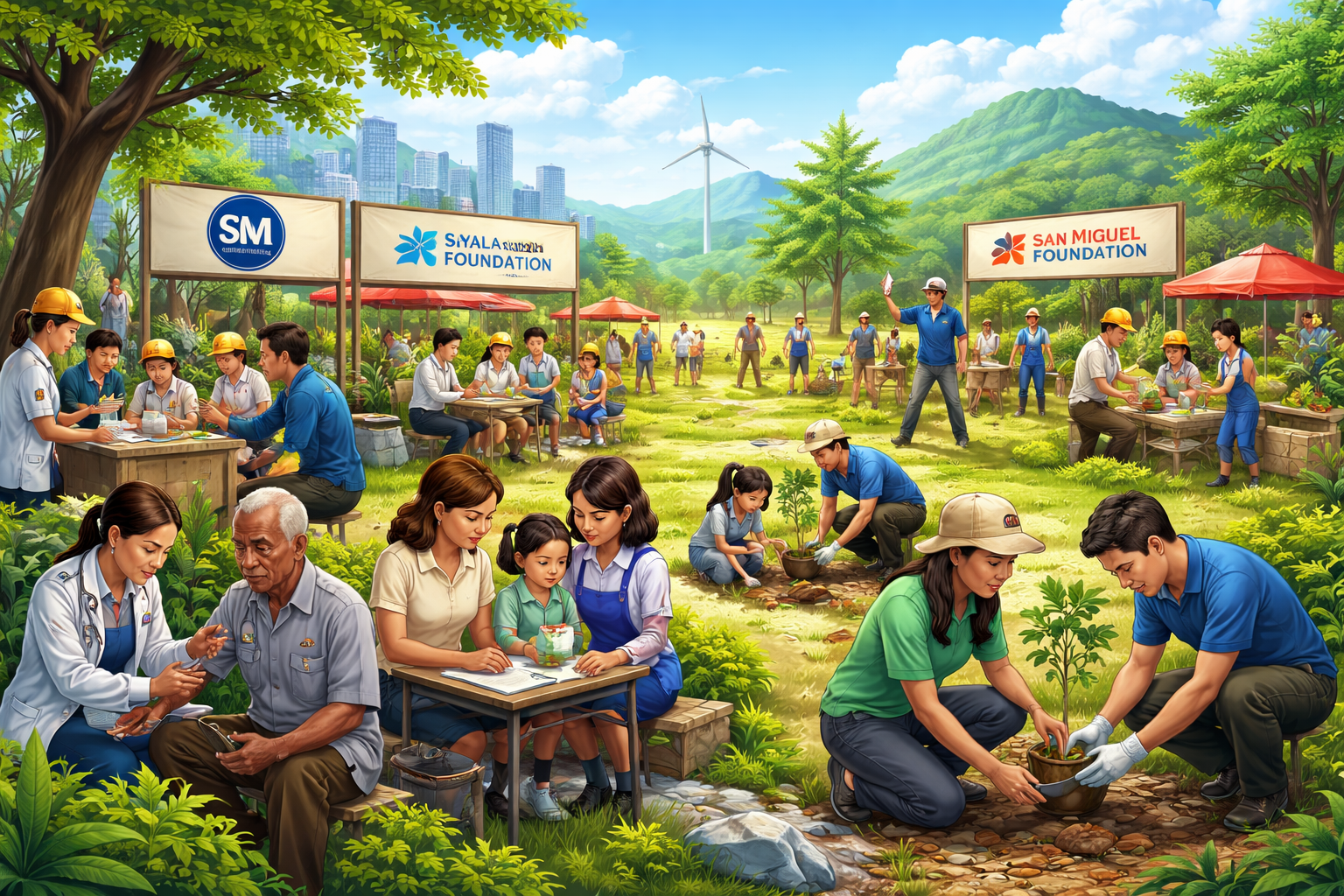
A key player in this movement is the Ayala Corporation, which has been actively involved in various philanthropic activities through the Ayala Foundation. The foundation’s work spans several key areas, with a strong focus on education. With its scholarship programs and partnership with schools, Ayala Corporation is helping to close the education gap in rural areas and provide the tools necessary for young Filipinos to thrive in an increasingly competitive world. Additionally, Ayala has implemented livelihood programs that encourage skills development and entrepreneurship, enabling communities to become more self-sufficient.
The SM Foundation, known for its retail business, has also played a critical role in transforming the lives of thousands of Filipinos. The foundation’s initiatives range from providing medical assistance through free health programs to granting scholarships to students from low-income families. Moreover, the SM Foundation is heavily involved in disaster relief and rehabilitation efforts, particularly after major natural disasters, providing not just aid, but also long-term recovery solutions. Their impact is visible across the country, especially in areas that are typically underserved or vulnerable.
Corporate philanthropy also extends to environmental sustainability, and the San Miguel Foundation has made significant strides in this area. The foundation runs various programs dedicated to reforestation, waste management, and renewable energy. San Miguel Corporation’s commitment to sustainable business practices is evident through its promotion of eco-friendly production methods and its investment in environmental projects that benefit both the ecosystem and local communities.
Local businesses, too, have joined the philanthropic wave in the Philippines, addressing specific needs in their neighborhoods. Small businesses often collaborate with local government units to implement programs focused on improving access to education, healthcare, and livelihood opportunities. These community-based programs can have an outsized impact because they are designed to cater directly to the needs of the people they aim to help, providing tangible benefits that contribute to long-term social stability.
The combination of educational programs, healthcare access, environmental sustainability, and disaster relief efforts spearheaded by these corporate philanthropies has transformed the Philippines’ social landscape. Not only are companies providing immediate assistance, but they are also creating systems that will help communities become more resilient in the future. Corporate philanthropy, in this sense, acts as a catalyst for systemic change, empowering people and laying the foundation for broader socio-economic improvements.
Through these concerted efforts, companies in the Philippines are proving that businesses can be a force for positive change. Their commitment to philanthropy is helping to create a more just, sustainable, and thriving society for future generations.