

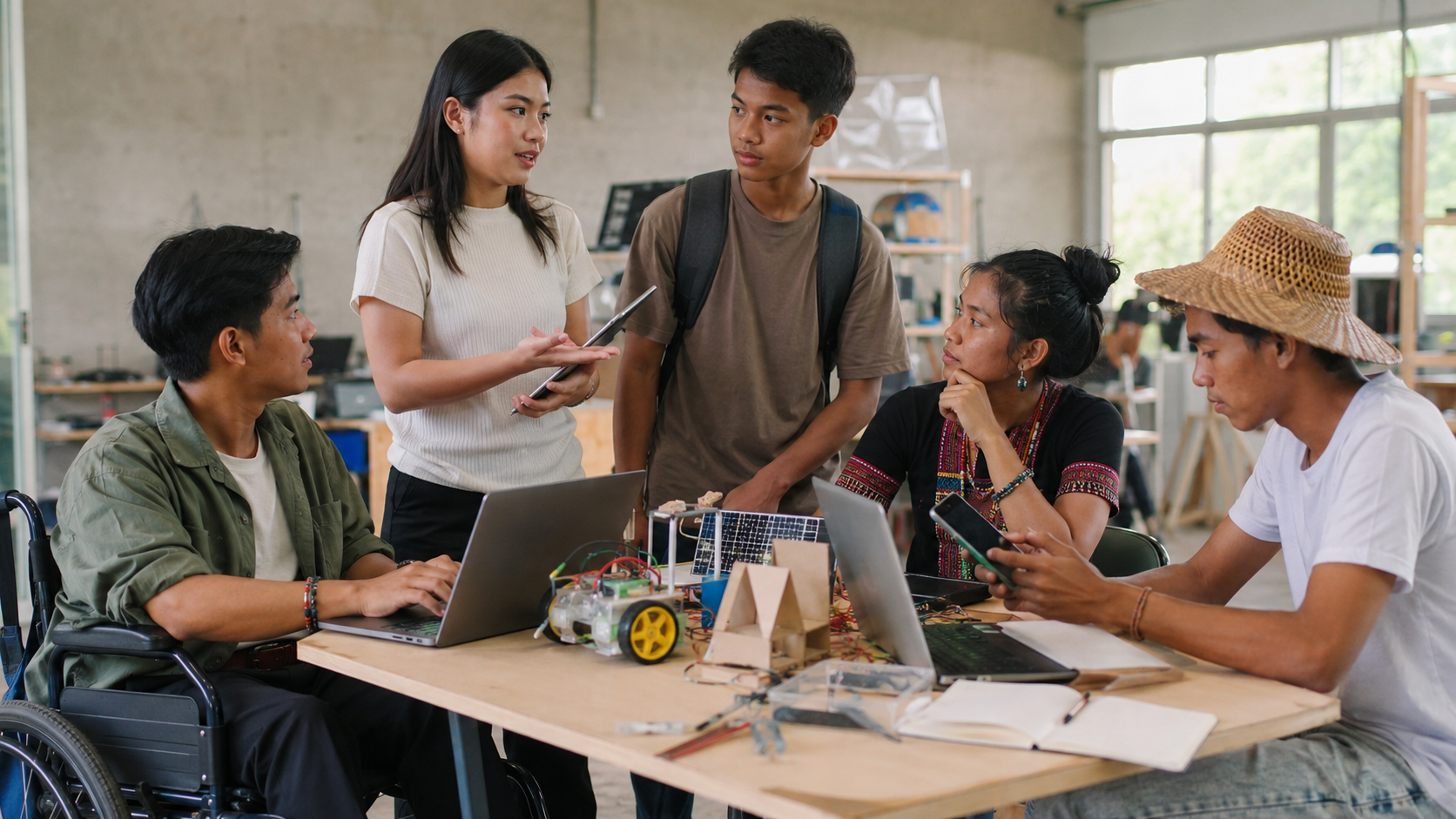
Startup activity in the Philippines has often been associated with Metro Manila, where founders can access investors, corporate partners, universities, and large consumer markets. However, technology education is creating opportunities for entrepreneurs in Cebu, Davao, Iloilo, Cagayan de Oro, Bacolod, and other regional centers.
This shift could help the country develop a more geographically diverse startup economy. It could also produce businesses designed around problems that are frequently overlooked by founders based in the capital.
Local Education Creates Locally Relevant Companies
Entrepreneurs who study and work within regional communities usually possess firsthand knowledge of local industries. In agricultural provinces, students may understand the difficulties farmers face in monitoring prices, accessing logistics, or securing credit.
In coastal areas, technology graduates may identify opportunities involving fisheries, tourism, environmental monitoring, or disaster response. Entrepreneurs in cities such as Cebu and Davao may focus on business process services, digital commerce, logistics, or creative industries.
This local knowledge can become a competitive advantage. A founder who regularly interacts with farmers, tourism operators, or neighborhood retailers may understand customer behavior more accurately than a company attempting to enter the market from a distant location.
Connectivity Is Part of Technology Education
Digital entrepreneurship cannot grow through curriculum reform alone. Students also need reliable internet access, affordable devices, software tools, and spaces where they can collaborate.
The Department of Information and Communications Technology plays an important role in national digital development, including connectivity, digital skills, and technology-related programs. Information about its initiatives can be found on the official DICT website.
Improved connectivity allows regional students to attend online courses, participate in national hackathons, contact mentors, and present products to investors without immediately relocating to Metro Manila.
It also enables universities to invite industry specialists into virtual classrooms. A software architect in Manila, an investor in Singapore, or a Filipino founder working overseas can mentor students in provincial institutions through digital platforms.
Regional Incubators Can Reduce Founder Migration
Many talented graduates leave their hometowns because local startup support remains limited. When universities establish incubators, shared laboratories, and industry partnerships, students gain a stronger reason to build companies in their own regions.
Regional incubators can provide product development facilities, legal guidance, accounting assistance, and introductions to local businesses. Their role should not be limited to organizing pitch competitions. They must help founders secure pilot customers and determine whether a business can survive outside an academic setting.
A logistics startup in Mindanao, for example, may benefit more from a pilot project with an agricultural cooperative than from winning a university presentation award. Practical market validation is more valuable than ceremonial recognition.
The Risk of Reproducing Manila-Based Models
Regional startup education should not simply replicate programs created for the capital. Different communities have different purchasing power, infrastructure, talent pools, and commercial priorities.
A subscription model that works among urban professionals may not be appropriate for rural microenterprises. An app requiring continuous high-speed internet may fail in areas with unstable connectivity. Students must learn to design products for the conditions in which customers actually operate.
Building an Archipelago-Wide Innovation Economy
A stronger Philippine startup ecosystem will emerge when entrepreneurship opportunities are not determined by location. Technology education can distribute knowledge, mentorship, and business-building skills across the archipelago.
The most promising regional founders may not begin with globally fashionable ideas. They may start by solving highly specific problems in agriculture, transportation, tourism, healthcare, or local commerce. When these solutions are tested successfully, they can expand to similar communities throughout the Philippines and other emerging markets.










Leave a Reply