

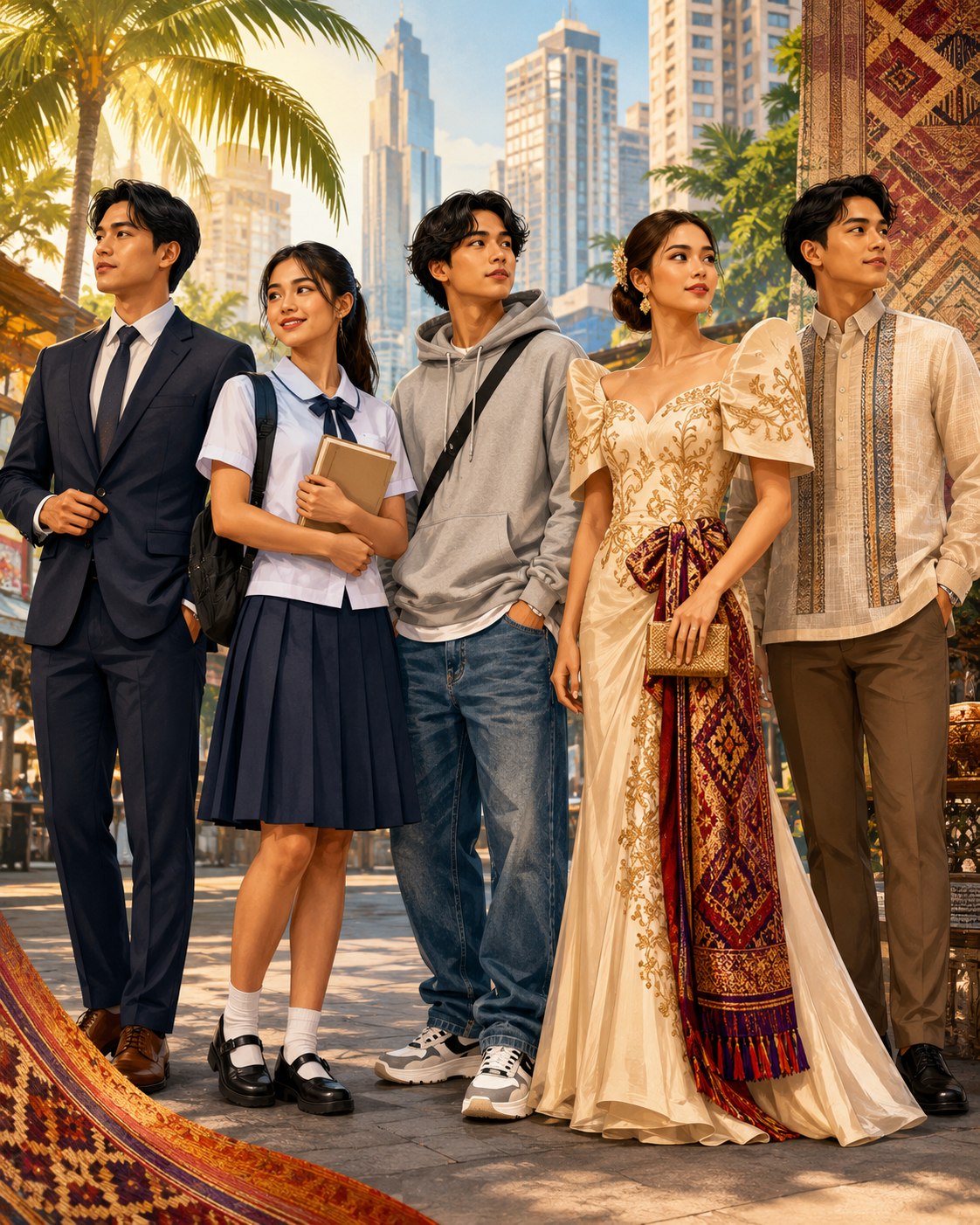
The development of fashion in the Philippines cannot be understood without looking at the influence of the West. Western fashion introduced new garments, new standards of appearance, and new ideas about what it meant to be modern. Over time, Filipinos absorbed these influences and combined them with local customs, producing a fashion culture that is both international and deeply rooted in Filipino experience.
In early Filipino communities, clothing was shaped by geography and available resources. People wore garments suited to the warm climate, often made from natural fibers and decorated with local weaving patterns. Clothing showed identity, skill, and social role. With Spanish colonization, Filipino dress changed significantly. Women were encouraged to wear more modest and layered clothing, while men adopted shirts and trousers influenced by European dress. The baro’t saya, pañuelo, and embroidered formalwear reflected this mixture of local and Spanish elements.
American colonization brought another major shift. The United States introduced public education, English-language media, and Western-style institutions. These changes affected fashion because clothing became connected to school, work, and public life. Students wore uniforms inspired by Western dress codes. Office workers wore suits, collared shirts, skirts, and polished shoes. Western clothing became a visible sign of discipline, respectability, and progress.
One important effect of Western fashion was the rise of ready-to-wear clothing. Instead of relying only on home sewing or custom tailoring, many Filipinos began buying mass-produced garments. This made fashion more accessible and faster-moving. Department stores and later shopping malls became important spaces where people encountered global trends. Imported brands also helped shape ideas of quality and prestige, especially among urban consumers.
Western influence also changed Filipino women’s fashion. Dresses, blouses, pencil skirts, trousers, and later jeans became common. These garments reflected changes in women’s roles, especially as more women entered schools, offices, and public professions. Fashion became linked to independence and mobility. At the same time, beauty ideals were influenced by Western magazines and films, which promoted certain hairstyles, body shapes, cosmetics, and ways of presenting femininity.
Men’s fashion also became more Westernized. The suit became a symbol of authority and professionalism, especially in politics, law, business, and education. However, because of the Philippine climate, Filipinos adapted formal wear to local needs. The barong Tagalog remained popular because it was elegant, breathable, and culturally meaningful. This shows that Western influence did not completely erase Filipino clothing traditions; instead, it existed beside them and sometimes reshaped them.
In modern times, Western fashion is spread through Instagram, TikTok, global celebrities, online shopping, and international fast-fashion brands. Young Filipinos often wear streetwear, athleisure, oversized shirts, sneakers, denim, crop tops, and minimalist outfits inspired by Western trends. Yet they also personalize these styles through local taste, humor, color preferences, and cultural values.
Filipino designers have responded by creating fashion that blends global structure with Filipino materials. Piña, jusi, abaca, indigenous weaves, and hand embroidery are used in modern dresses, suits, and formalwear. This approach gives Filipino fashion a unique voice in a global industry.
Western fashion has clearly transformed the Philippines, but Filipino style is not a passive imitation. It is a process of selection, adaptation, and reinvention. The result is a clothing culture that reflects history, creativity, class, climate, and the continuing search for identity.





Leave a Reply