

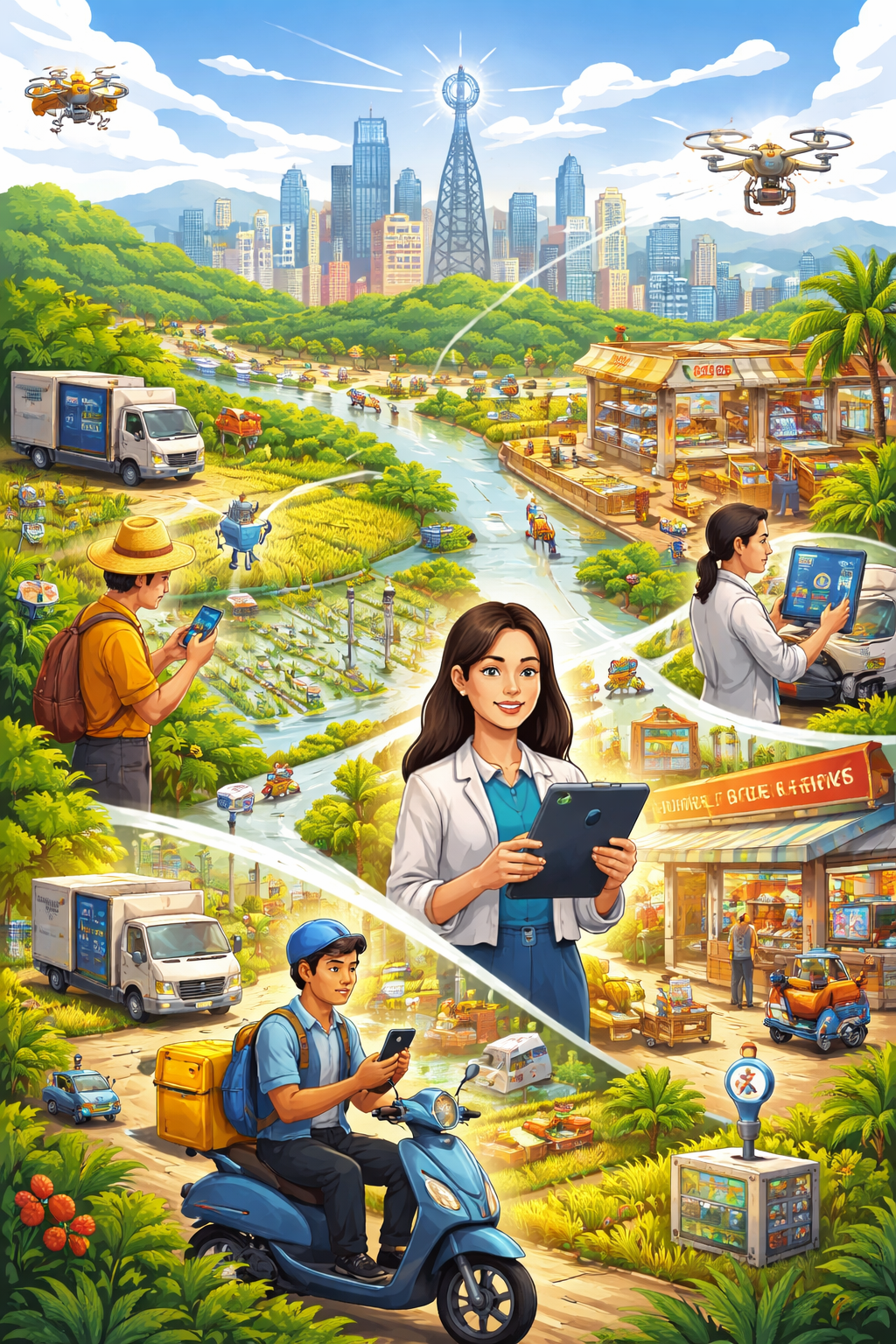
IoT technology is increasingly influencing how startups in the Philippines develop products, manage resources, and compete in both local and regional markets. The Internet of Things connects physical objects to the internet so they can gather and share data automatically. This capability allows startups to move beyond guesswork and make better decisions based on live information from devices, machines, and environments.
For Philippine startups, this is especially valuable because many businesses must operate in complex and uneven conditions. Urban areas deal with traffic, dense populations, and infrastructure pressure, while rural areas often face service limitations and logistical obstacles. IoT gives startups a practical way to bridge these gaps. Through connected systems, small businesses can monitor operations from a distance, automate routine activities, and create faster responses to changing conditions.
One of the strongest examples can be seen in transportation and logistics. Startups in this sector are using IoT-enabled vehicle tracking, fleet monitoring, and route optimization platforms to improve delivery performance. In a country made up of many islands, transport visibility is critical. IoT helps businesses know where assets are, whether goods are being handled correctly, and how delays can be reduced. For food delivery, courier services, and supply chain startups, these improvements directly increase efficiency and customer trust.
IoT is also transforming the way startups serve the agricultural sector. Many Filipino farmers still rely heavily on manual observation and traditional practices. Startups are introducing smart devices that can monitor weather conditions, water usage, pest risks, and soil quality in real time. With this information, farmers can apply fertilizer more accurately, irrigate only when necessary, and avoid unnecessary losses. This strengthens agricultural productivity while helping startups build scalable solutions for a large and underserved market.
In urban settings, proptech and smart city startups are using IoT to improve building management and public services. Smart locks, occupancy sensors, connected surveillance systems, and environmental monitors are now being used in offices, co-living spaces, and commercial properties. These tools improve safety, reduce energy waste, and create more efficient use of space. Startups offering these services are not only selling hardware but also recurring digital services based on monitoring and analytics.
Healthcare startups are another area where IoT is making a strong impact. Wearable devices and remote monitoring systems allow patients to be observed outside hospitals, which is useful in communities where medical facilities are not easily accessible. Startups can build digital health platforms that support chronic disease management, elderly care, and post-treatment follow-up. In this way, IoT becomes part of a larger healthcare ecosystem that includes telemedicine, cloud records, and preventive care.
From a business perspective, IoT also improves startup competitiveness. Data gathered from connected devices can reveal customer behavior, machine performance, service quality, and product usage patterns. This helps founders refine offerings, reduce costs, and identify new market opportunities. Investors often value startups that can demonstrate measurable efficiency and data-driven growth, and IoT gives them a clearer way to do that.
Still, adoption is not without difficulties. Many startups must deal with expensive deployment costs, limited hardware supply chains, inconsistent connectivity, and concerns over data protection. Since IoT systems rely heavily on internet access and secure data exchange, poor infrastructure can weaken performance. There is also a growing need for engineers, data analysts, and cybersecurity specialists who understand connected ecosystems.
Even so, IoT continues to unlock meaningful potential for startups in the Philippines. It enables innovation that is practical, scalable, and highly relevant to local needs. As the country’s digital economy expands, startups that successfully integrate IoT into their products and operations are likely to become more resilient and more influential in shaping the future of Philippine business.









Leave a Reply